A personal story about outdoor life, body image, belonging & why adventure should never come with a size limit.
This article is not sponsored. All brands, products & experiences mentioned are based solely on my own experiences & opinions.
20-25 min. read.
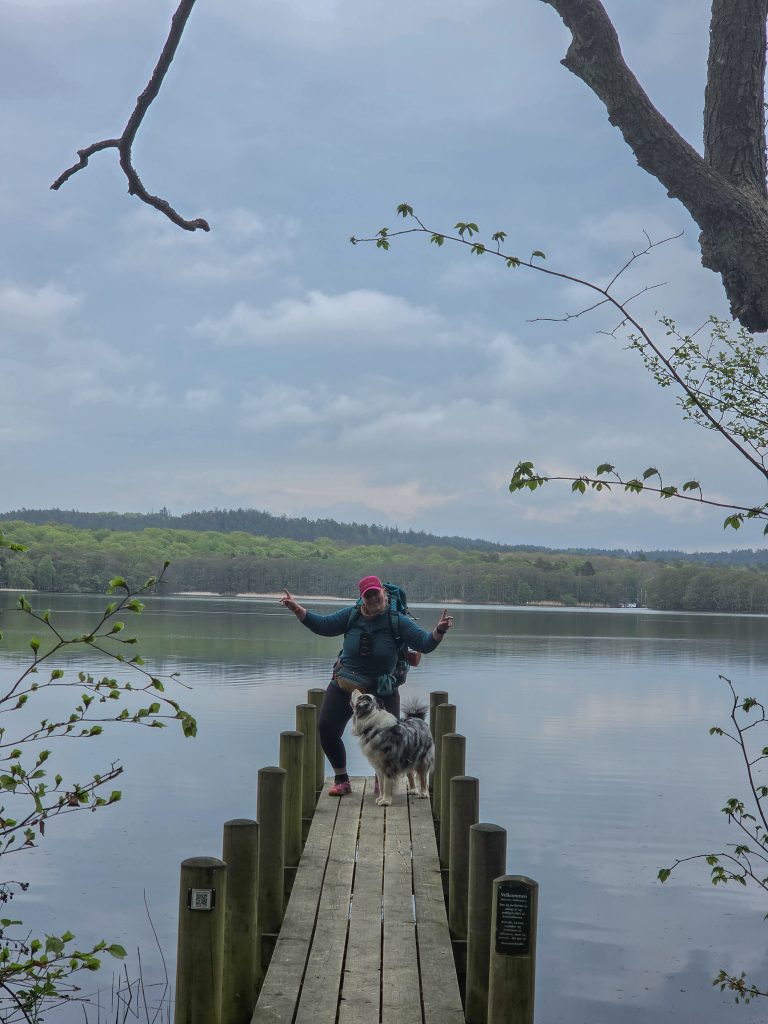
If you follow Sandraway, you probably know me as the woman behind the camera. The one chasing sunrises, carrying a backpack onto yet another trail, hiking with Kenzo, travelling with my family, heading out alone & constantly dreaming about the next adventure. What you may not know is that for much of my life, I’ve carried a quiet feeling of not quite fitting in.
It was never necessarily because anyone explicitly told me that I didn’t belong. It was more subtle than that, built slowly from all the small things that accumulate over time. Clothing sizes that never seemed to make sense, assumptions made before people knew anything about me, fitting rooms where the largest size still wasn’t made for my proportions & the constant feeling that somewhere out there existed a version of “normal” that I never seemed to fit quite as naturally as everyone else.
For years, I genuinely believed the problem was me. If I worked a little harder, lost more weight or became a little smaller, surely I would eventually fit the clothes, the expectations & perhaps even the image I had created of what I was supposed to look like.
It has taken me a long time to question that assumption, because perhaps my body was never the only thing that needed questioning. And perhaps fitting in isn’t quite the same thing as belonging.
What started as an article about outdoor clothing has therefore become something much bigger. It is still a practical guide to the brands & products that have worked for me, because finding functional outdoor clothing in a larger body can be surprisingly difficult. But it is also a personal story about body image, assumptions, confidence, belonging & all the life we risk postponing while waiting to become a different version of ourselves.
If you’re mainly here for the practical recommendations, you can skip directly to The Plus Size Outdoor Guide I Wish I Had Years Ago. But if you stay for the rest, I hope you’ll understand why this was never really just a story about finding a pair of hiking trousers.
I thought my body was the problem
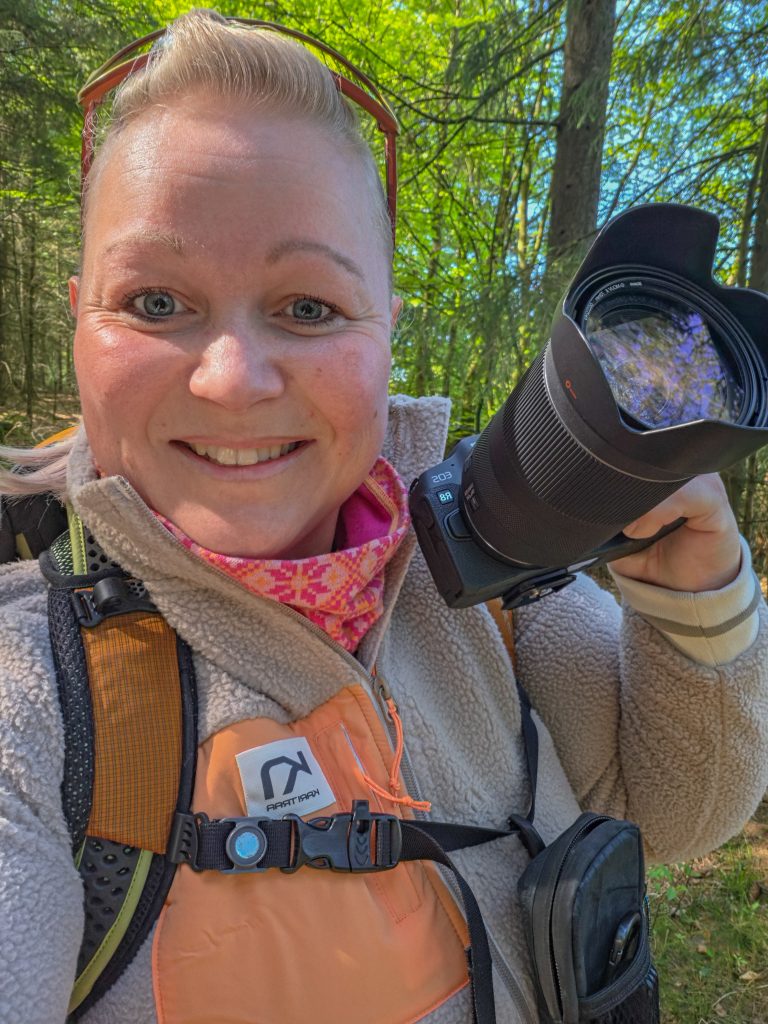
I’ve always been built differently from many of my friends. Even when I was younger & considerably lighter than I am today, I was never the girl who effortlessly fitted into whatever happened to be hanging on the rack. I’ve always had broad shoulders, a larger chest, wide hips & strong legs. My weight has fluctuated throughout my life, but my basic proportions have remained surprisingly consistent.
Even at 18, when I was at my thinnest, I often needed large or extra-large tops simply because of my shoulders & chest. I didn’t really understand that at the time. Instead, I absorbed an idea that I suspect many women know far too well: if the clothes don’t fit, perhaps your body is the thing that needs fixing.
So you try another size, another brand, another diet or another promise to yourself that you’ll buy the trousers, take the photograph, wear the swimsuit or do the thing once you’ve lost those last kilos. There is always the possibility of a future version of you who will somehow fit more easily into everything.
The older I’ve become, however, the more I’ve realised how many women around me carry some version of the same frustration. Friends, family members & colleagues with completely different bodies tell me about needing an XL in one shop & a medium in another, about trousers that fit their thighs but leave a huge gap at the waist, or jackets that fit everywhere except across the chest. I have increasingly found myself wondering how many bodies need to be considered “difficult to fit” before we start questioning the clothes instead of the bodies wearing them.
Human beings have always come in different shapes, proportions & sizes, & they always will. It seems reasonable that the clothes made for us should reflect that reality a little better.
For me, that became particularly obvious as my love for the outdoors grew. I spend a significant amount of my free time outside, hiking, walking, camping, travelling, biking & exploring, & one of the things that has challenged me most about outdoor life has rarely been the actual outdoors. More often, it has been finding functional clothing that allows me to move comfortably enough to forget about what I’m wearing.
Sometimes, quite literally, the hardest part of the hike is finding the damn trousers.
Nature never cared
There is a strange contrast in that, because while the outdoor industry has occasionally made me feel as though my body is somehow unusual, nature itself never has.
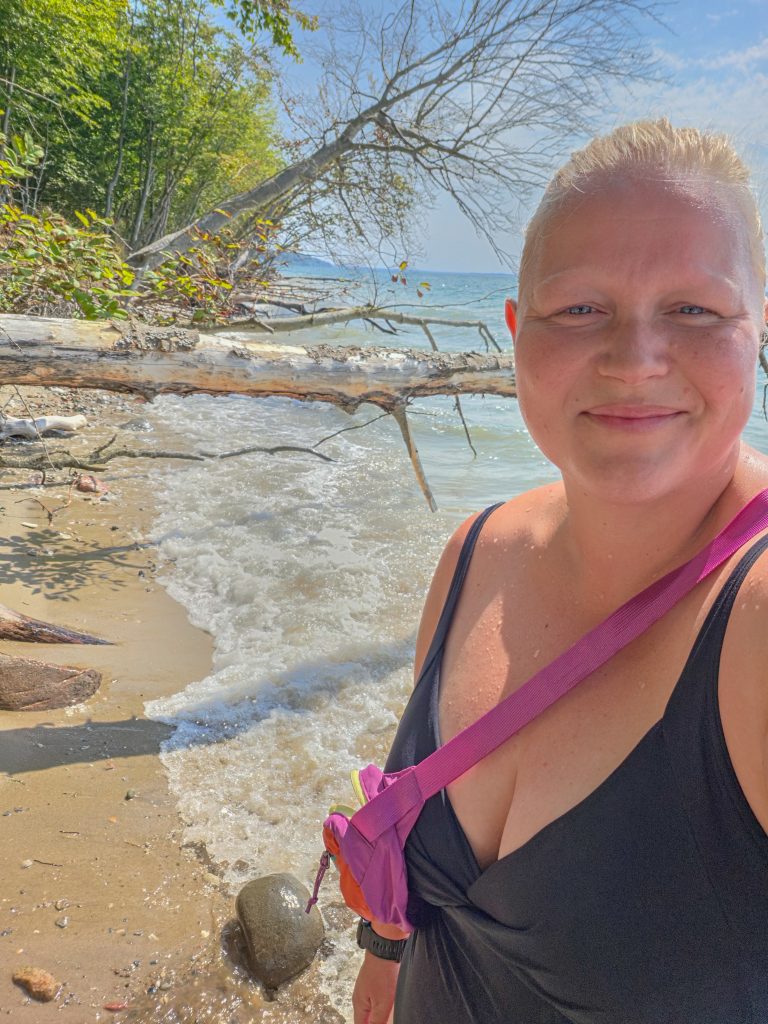
The mountains I’ve climbed have never asked for my BMI. The forests I’ve wandered through have never questioned whether I belonged there, & the trails have never cared what size was written inside my jacket. Nature has always allowed me to simply show up as I am.
Perhaps that is one of the reasons I keep returning to it.
When I’m outside, I’m not a clothing size, a number on a scale or somebody else’s assumption about what a person with my body can or cannot do. I’m simply Sandra, a woman who loves being outdoors. There is a freedom in that which I find increasingly valuable, because everyday life is filled with categories, numbers, expectations & comparisons. We are constantly being told, directly or indirectly, what we should look like, what we should achieve, how productive we should be & which version of ourselves we should be working towards next.
Nature has a remarkable way of making much of that feel temporarily irrelevant. The trail is still there regardless of what you’re wearing. The sunrise doesn’t become any less beautiful because the person watching it wears an XXL, & the rain has the wonderful democratic quality of making absolutely everyone look slightly ridiculous eventually.
For me, being outside has gradually become less about reaching another summit or collecting another destination & more about the perspective that comes with stepping away from everything else for a while. Sometimes I need a mountain, but often a forest path, the sea, a walk with Kenzo or half an hour outside is enough. The noise gets quieter, thoughts have room to settle & whatever felt overwhelmingly important an hour earlier often becomes slightly easier to put into perspective.
That is also why seemingly small barriers to outdoor life matter. A pair of hiking trousers is, of course, only a pair of hiking trousers, until you can’t find one that fits. Then it suddenly becomes something standing between you & an activity that should have very little to do with the circumference of your hips.
Adventure doesn’t come with a size requirement. I don’t think the clothing that makes it possible should either.
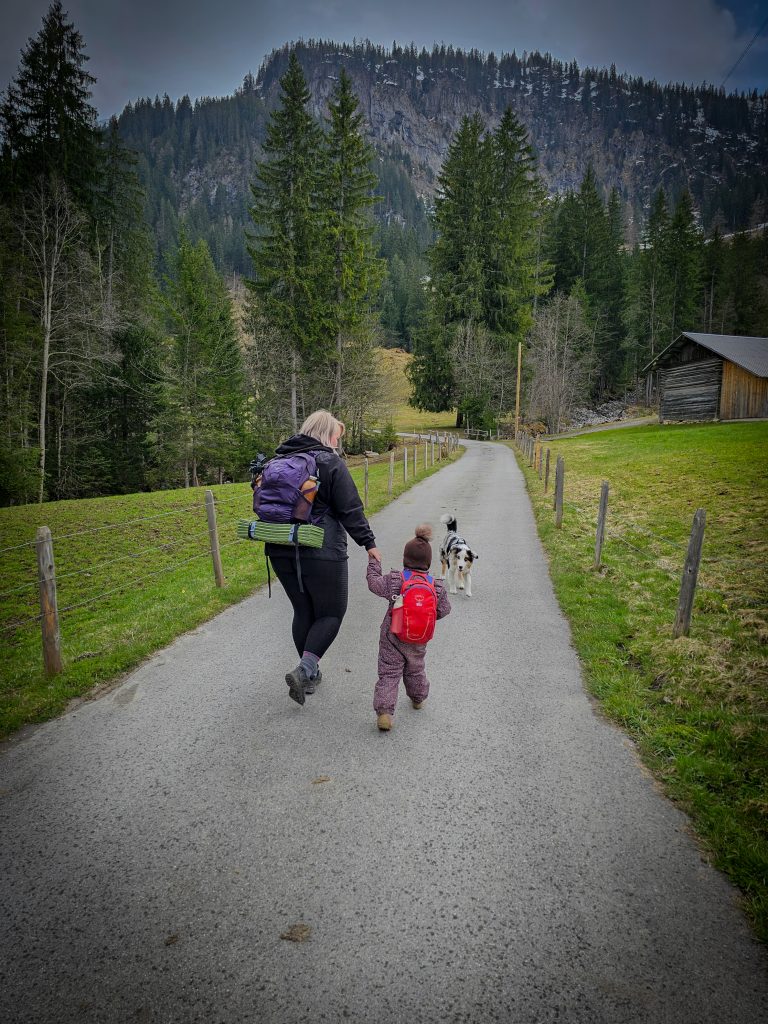
When a number enters the room before you do
Over time, I’ve also become more aware of how quickly body size can become shorthand for an entire person, & that experience hasn’t been limited to clothing stores or outdoor brands.
One of the clearest examples for me came during my pregnancy with Camille. At times, it felt as though my BMI entered the room before I did. Conversations about possible risks, complications & additional monitoring appeared early, largely because of what a number on a chart suggested might happen. In my particular pregnancy, many of those anticipated complications never materialised, & Camille arrived healthy.
What stayed with me wasn’t that healthcare professionals considered potential risks. Of course they should, & this isn’t an argument for pretending that weight has no relevance to health. What stayed with me was how easily one measurement could become the dominant frame for a conversation about an entire person.
I think those two things can exist at the same time. Weight can be medically relevant without being the only relevant thing about somebody’s health, life or body. Human beings are generally more complicated than any single measurement can capture.
For years, I have also tried to lose weight myself. I’ve counted calories, tracked meals, followed programmes, worked with professionals & tried many of the approaches we’re told should make the equation work. Since becoming a mother, I’ve lost more than 20 kilograms, & perhaps I will lose more in the future. My body may change again, just as it has changed before.
But at some point, I realised that none of that actually answers the question at the heart of this article.
Because this isn’t a story about becoming smaller. It’s a story about refusing to postpone life while waiting to become smaller.
I know how easy that postponement can become. You tell yourself you’ll buy something when you’ve lost weight, be in more photographs next time, wear the swimsuit when you feel more comfortable, take the trip later or try something new once you’re fitter. Without really noticing, you begin negotiating with a future version of yourself about when you’re finally allowed to participate fully in your own life.
I’ve done that too, & I don’t want to anymore.
There are mountains I want to climb, places I want to photograph, mornings I want to wake up in a tent, trails I want to walk with Kenzo & adventures I want to share with my family. Whether my body becomes smaller, larger or stays exactly as it is should not determine whether those things get to happen.
Life isn’t waiting for me to fit into a smaller pair of trousers, so neither am I.
The Plus Size Outdoor Guide I Wish I Had Years Ago
That brings me back to the trousers, because personal reflections are all very well, but I still need something to wear when I go outside.
Over the years, I’ve spent countless hours searching for outdoor clothing that works with both my body & the way I actually use it. I’m not particularly interested in wearing a specific logo across my chest simply because it is the right outdoor brand. What matters to me is whether something works. If I’m hiking for hours, carrying a backpack, sleeping in a tent or spending an entire day outside, I want to think about where I’m going rather than a waistband digging into my stomach, trousers restricting my thighs or a shirt constantly riding up.
I’ve also learned that there is no single perfect plus-size outdoor brand, at least not for me. Some brands get the sizing right but offer almost nothing in the colours I love. Others make fantastic products that simply don’t suit my proportions. Some are clearly trying to broaden their ranges but haven’t quite reached my body yet, while others have surprised me completely.
So this isn’t intended as a definitive list of the best plus-size outdoor brands. It is simply a collection of the things that work, almost work or have taught me something useful after years of searching.
Hiking trousers: Engelsons, Fjällräven & RevolutionRace
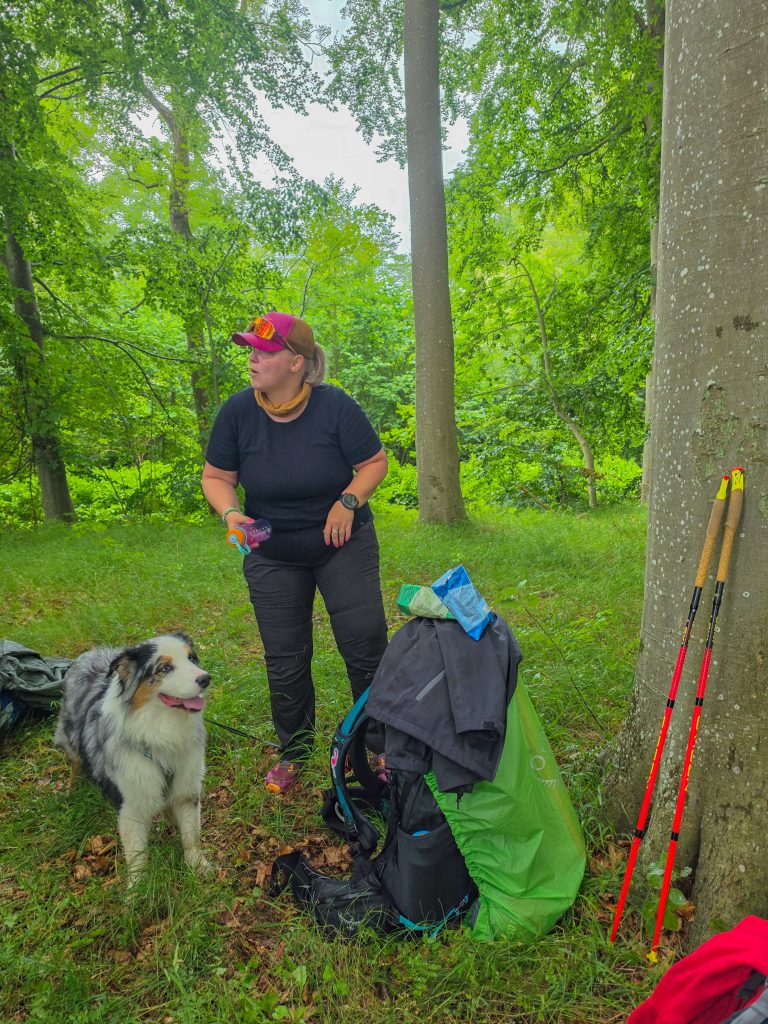
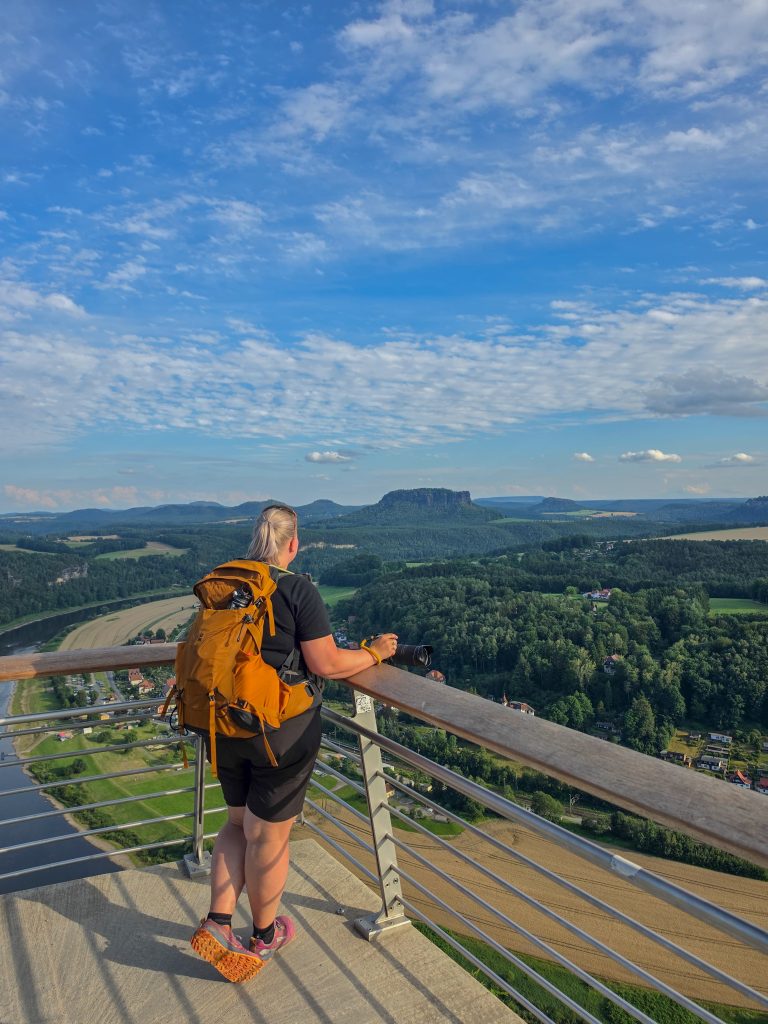
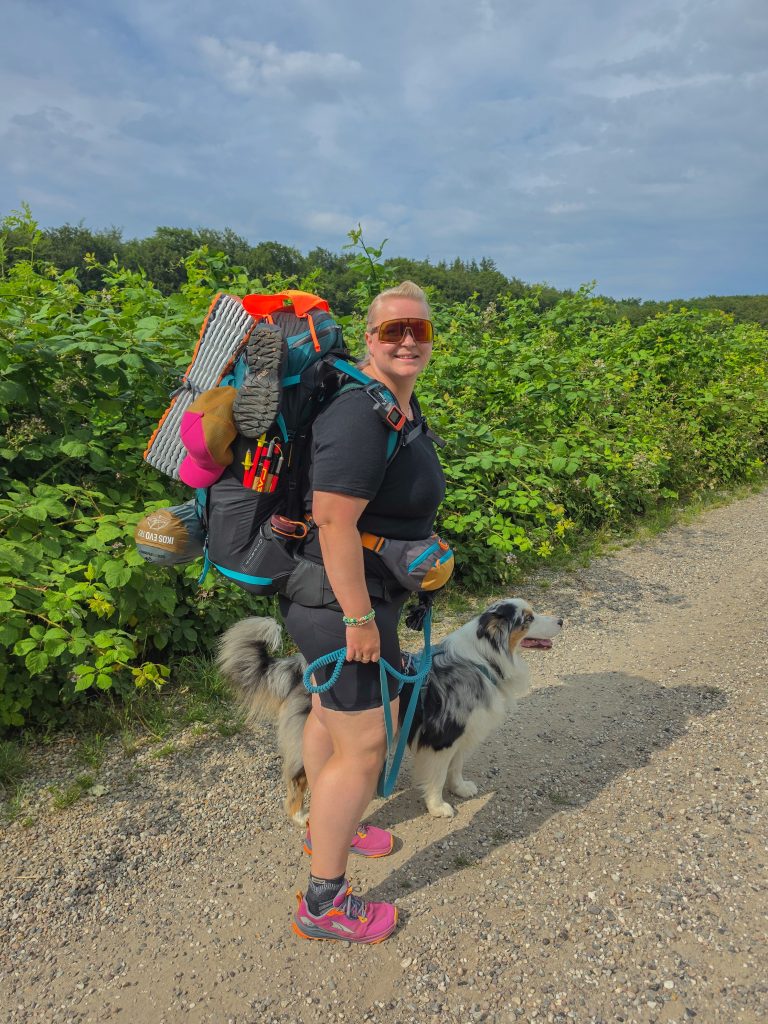
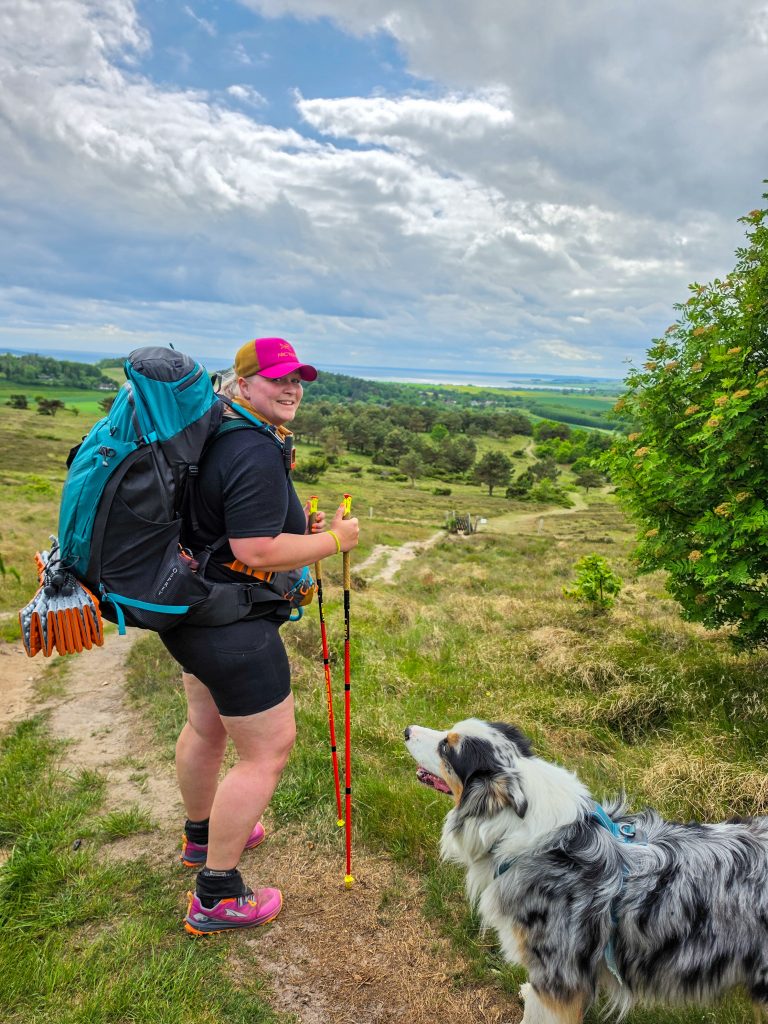
Of all the brands I’ve tried, Engelsons has given me some of the most reliable options when it comes to actual hiking trousers. Their Helags trousers have become a staple in my wardrobe, while their Travel trousers & shorts probably fit my body best overall.
The Travel range is soft, stretchy & comfortable, with enough room around my hips, thighs & bum, which is usually where outdoor trousers become difficult for me. I can move freely in them without constantly being reminded that I’m wearing them. Ironically, my biggest fit issue is the opposite of what I normally experience: the waist can actually be a little too generous, leaving some gaping at the back. I therefore often wear them with a belt, but I still wouldn’t size down because I’d rather preserve the freedom of movement everywhere else. For me, a belt is a very small compromise for an otherwise excellent fit.
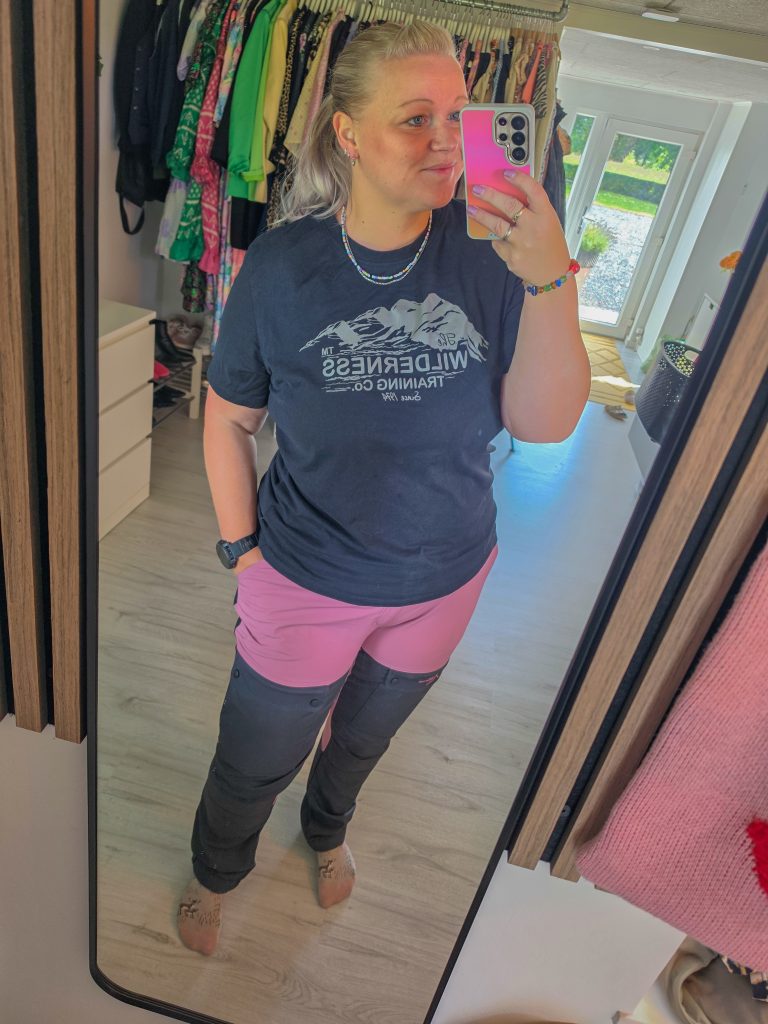
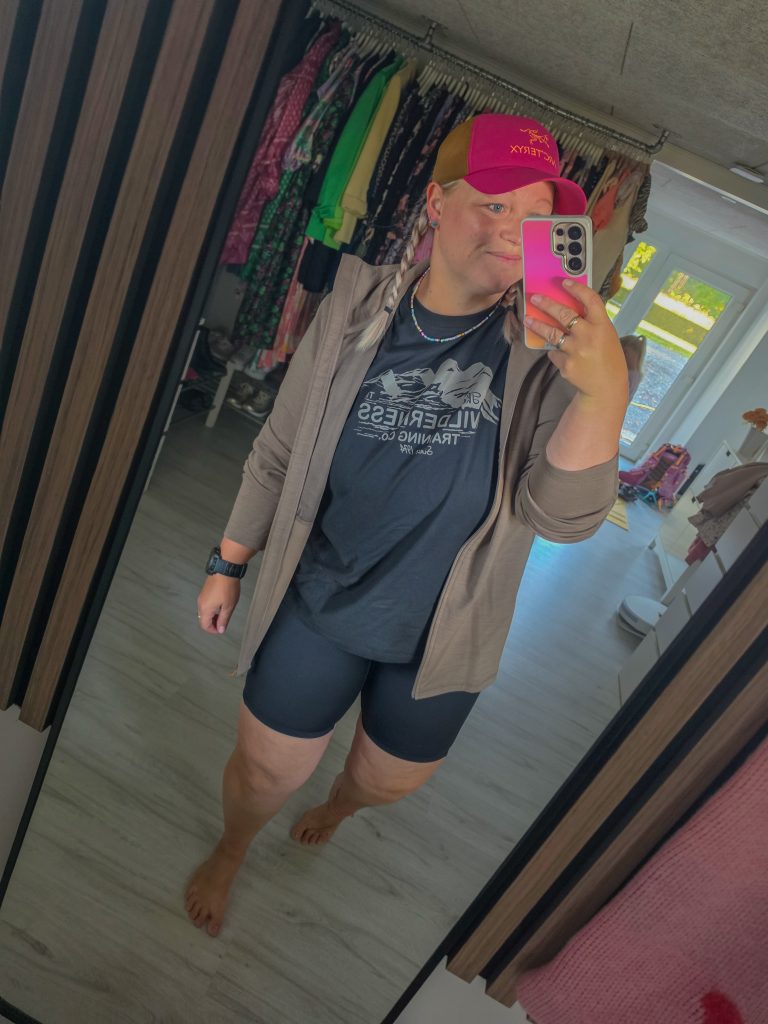
The Helags trousers are another favourite, although the fabric around the large thigh pockets is less flexible than the material elsewhere. If, like me, you carry more around your thighs, they can initially feel a little restrictive in that area. Mine have softened with wear & washing, but it is worth knowing before buying.
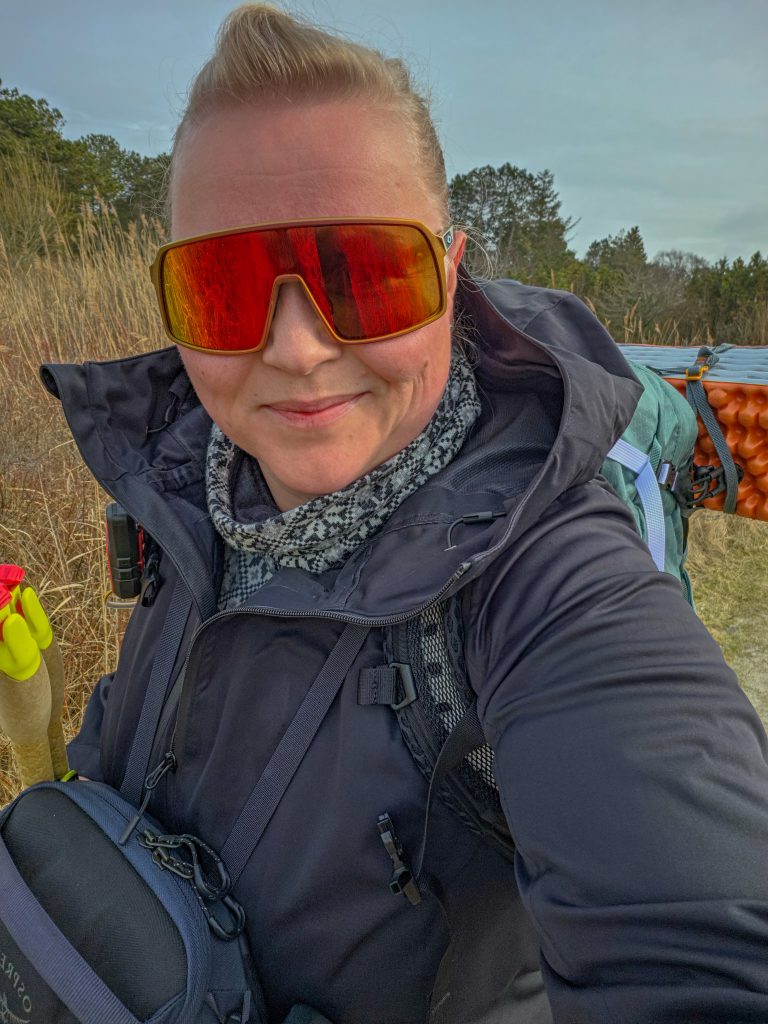
Showed below: Me wearing the Travel shorts & trousers from Engelsons at Fjällräven Classic Denmark in 2026 & on some other hikes. I am also wearing the Dilling merino wool t-shirt on most of the pictures.
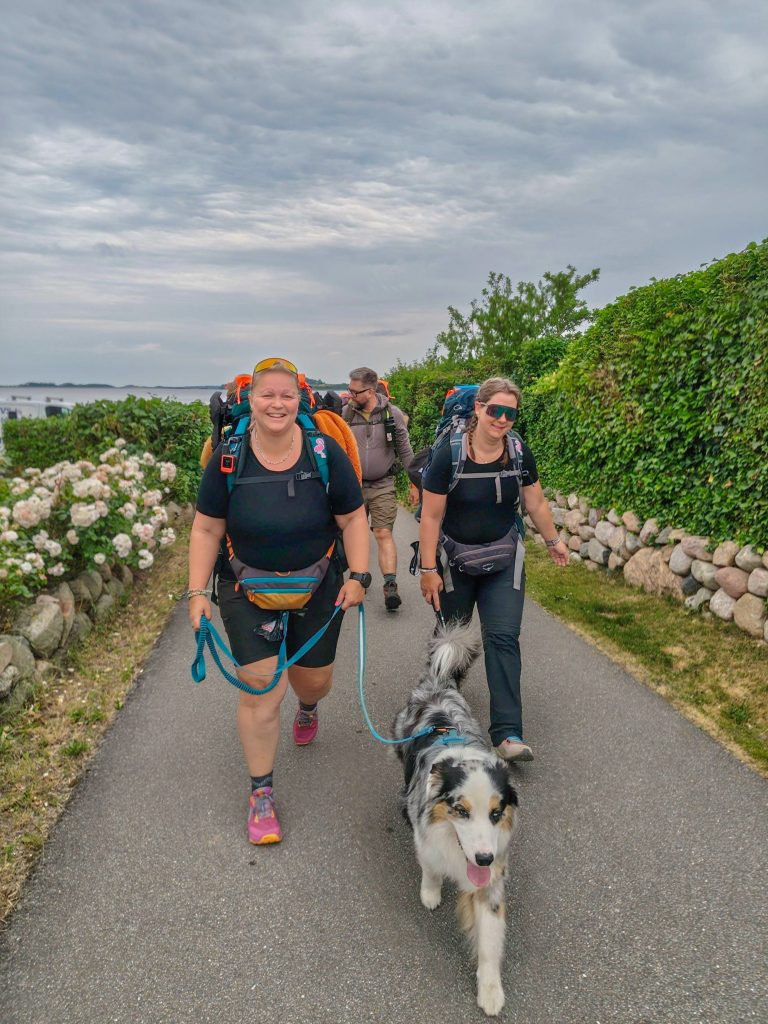
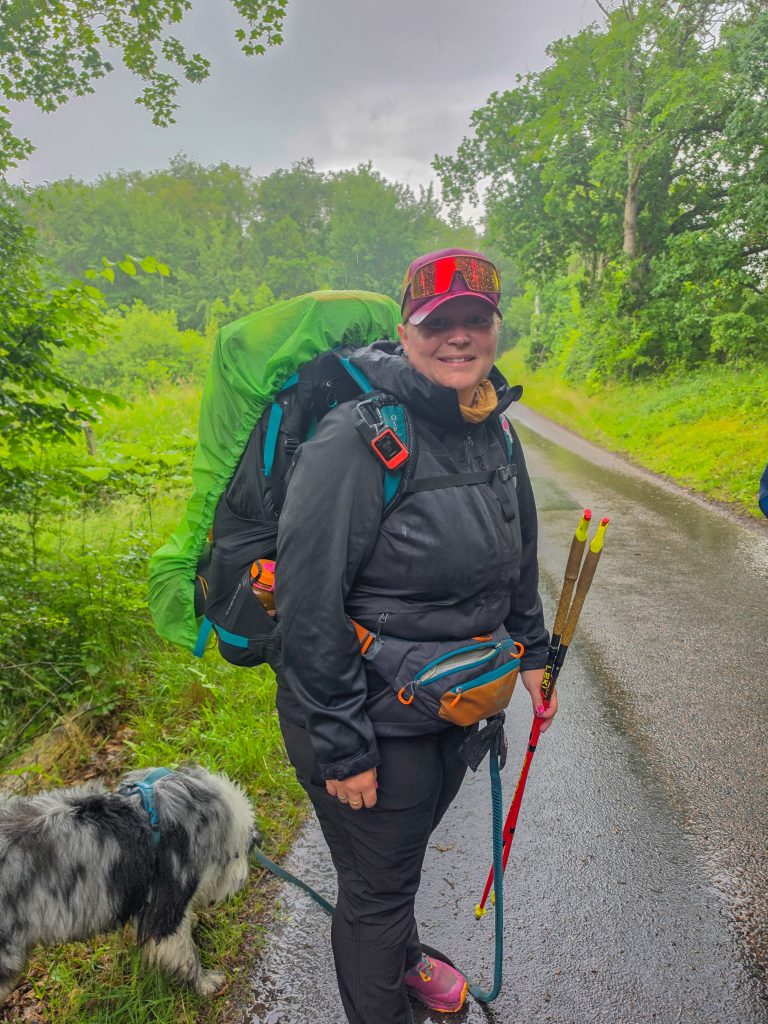
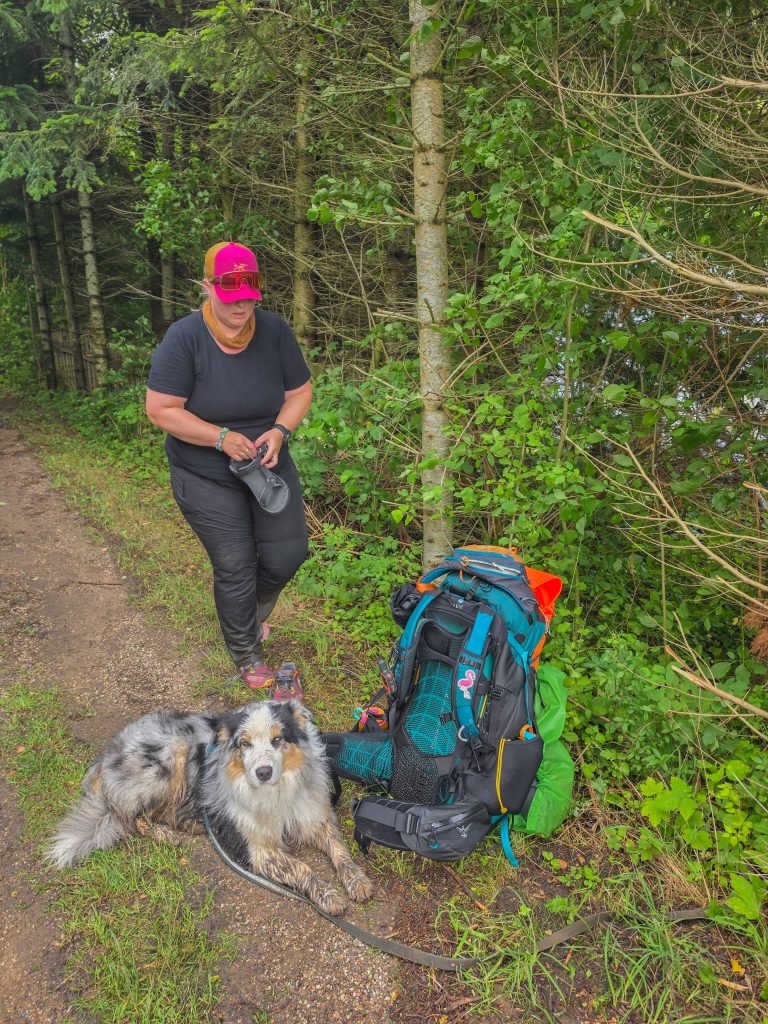
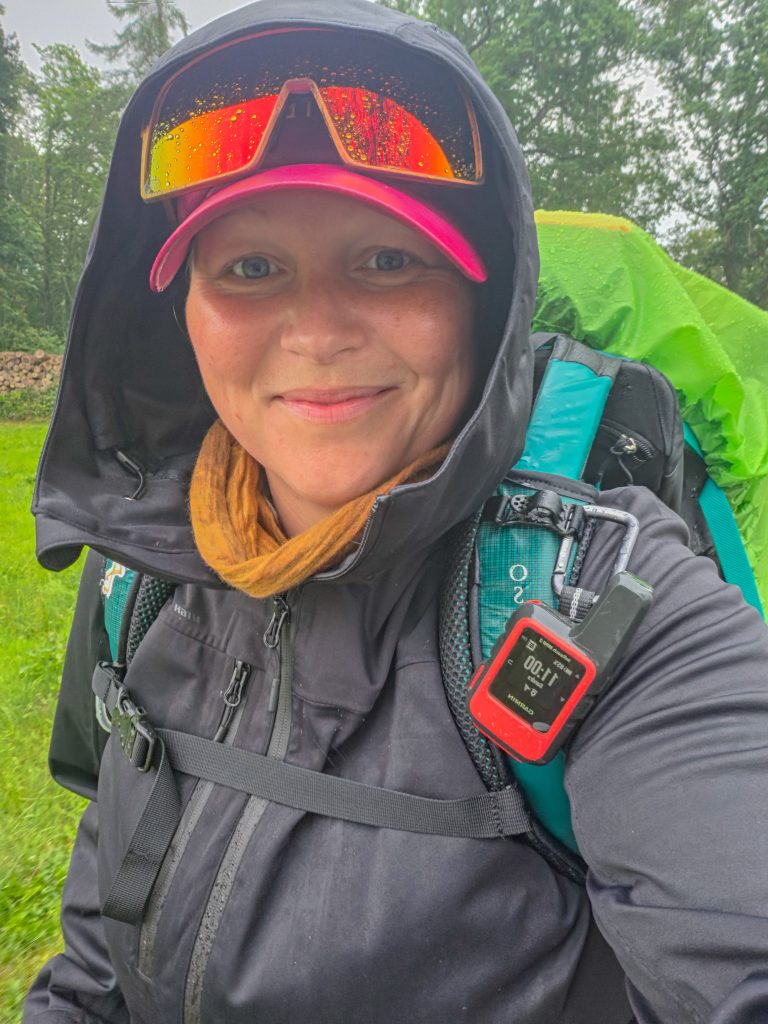
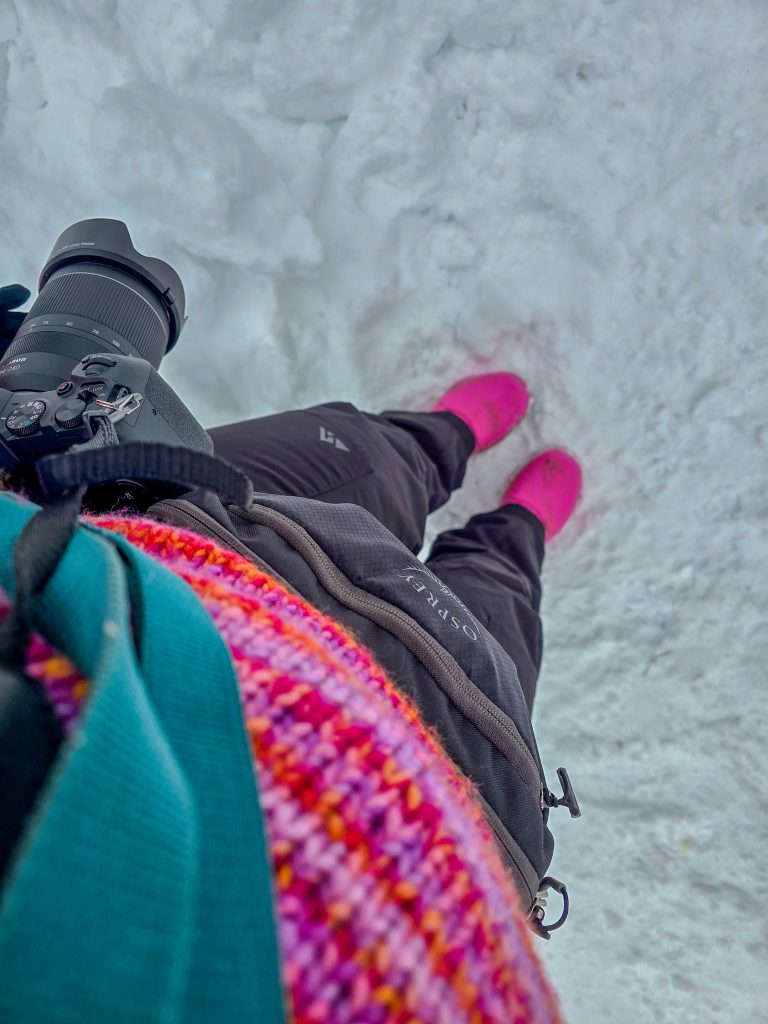
Showed below: Wearing Engelsons softshell/rain-jacket in pouring rain all day & the pink Helags trousers paired with their Wilderness t-shirt.
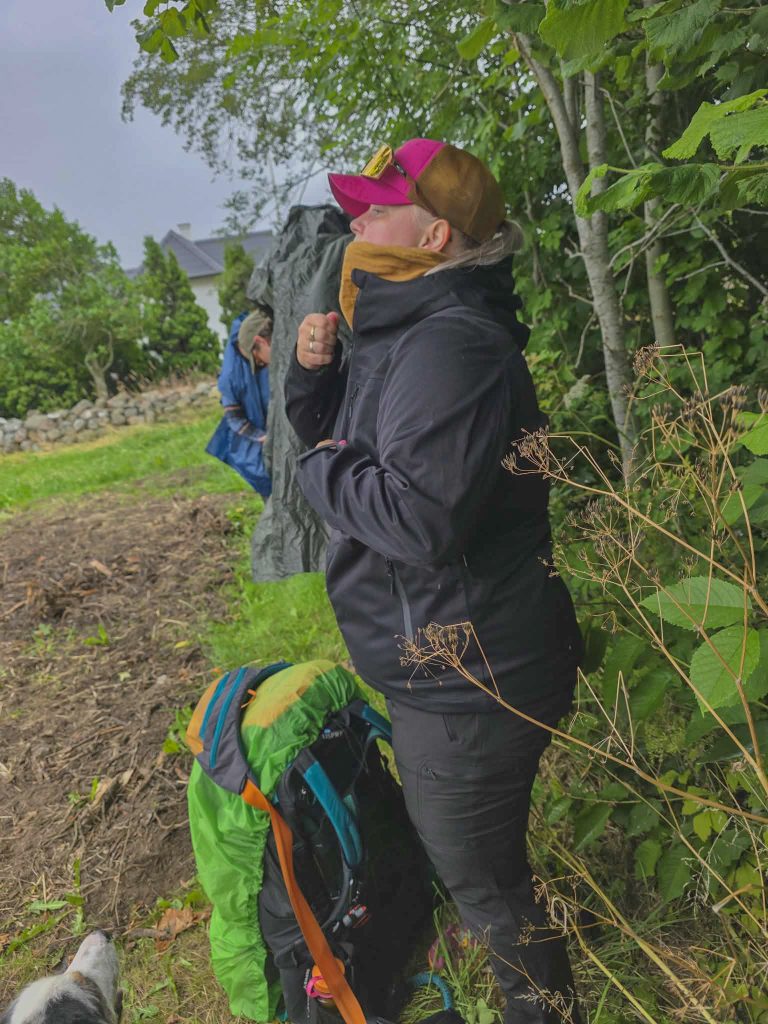
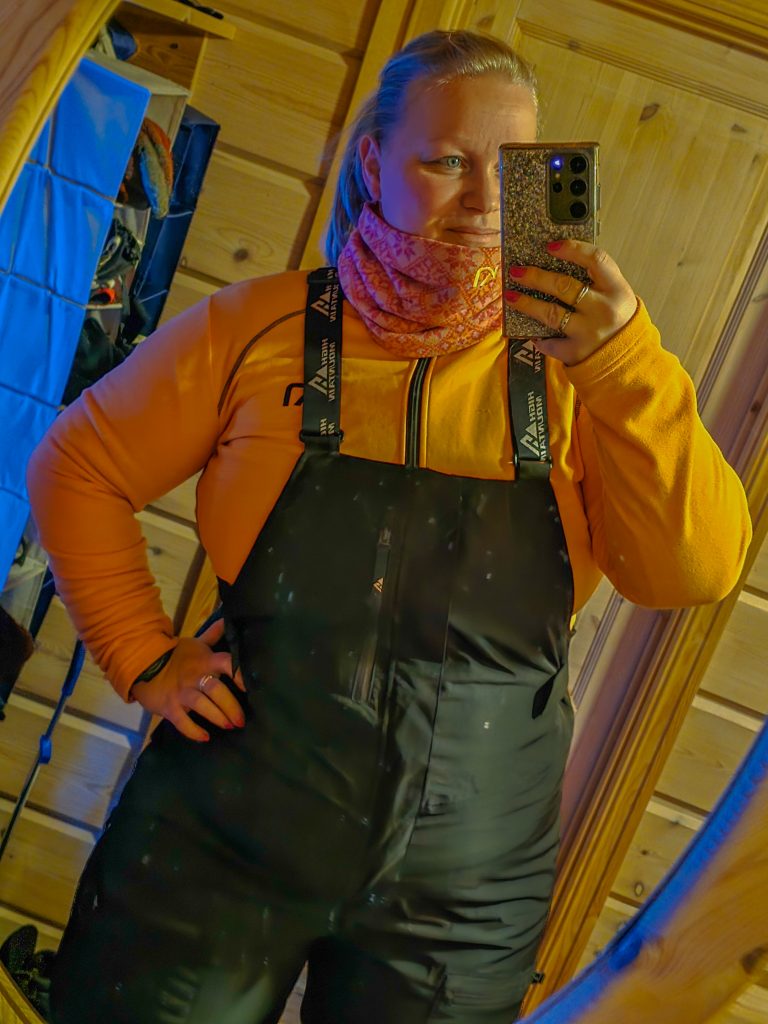
Also showed: Engelsons skiing-pants & the softshell jacket in use, without the rain.
Fjällräven, on the other hand, is one of those brands I have wanted to fit me better for years. Their Keb Curved trousers looked incredibly promising when I first tried them. The concept made sense, the proportions came closer than many traditional hiking trousers I’ve worn & I could clearly see that somebody had thought about women whose waist & hips don’t follow a straight line. Unfortunately, the relationship between the waist & hip measurements still didn’t quite work for my particular shape.
There is something almost more frustrating about getting that close than trying a brand that clearly doesn’t offer your size at all. You can see the intention, appreciate the effort & still walk away knowing that you’re not quite the person the product was designed for.
I’ve had a somewhat similar experience with RevolutionRace. I own one of their sherpa fleeces & have been happy with it, but even that ended up being a men’s model & still fits more snugly than I would ideally choose. Both Fjällräven & RevolutionRace remain on my radar because their ranges continue to evolve, but neither has yet become the easy, reliable fit for me that I would love them to be.
Merino wool & base layers: Dilling & Kari Traa
Wool has gradually taken over a fairly ridiculous amount of my outdoor wardrobe. I hike in it, camp in it, sleep in it & travel in it, & when it comes to merino, Dilling & Kari Traa are two brands I keep returning to for quite different reasons.
Dilling is one of my more recent discoveries, & I’ve been genuinely impressed by their plus-size options. Their T-shirts & long-sleeved layers are comfortable, functional & give me enough room to move without making me feel as though I’m squeezing myself into something designed for a completely different body. That might sound like a very low bar for clothing, but anyone who has spent enough time shopping at the upper end of a size chart probably knows that it isn’t always a given.
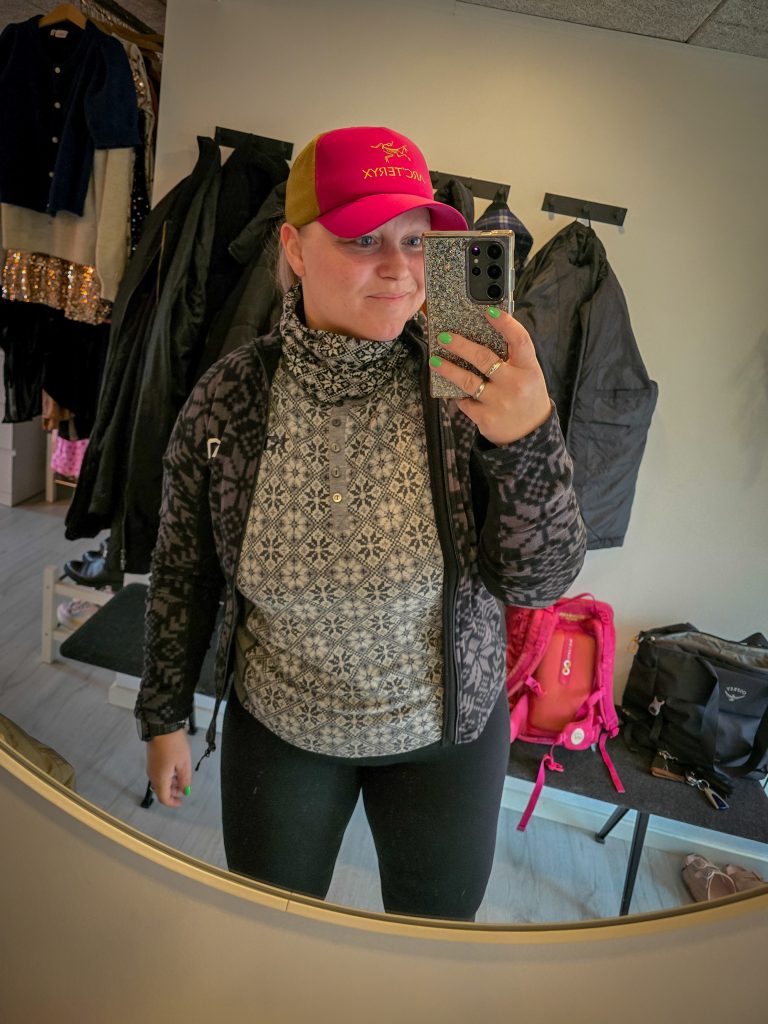
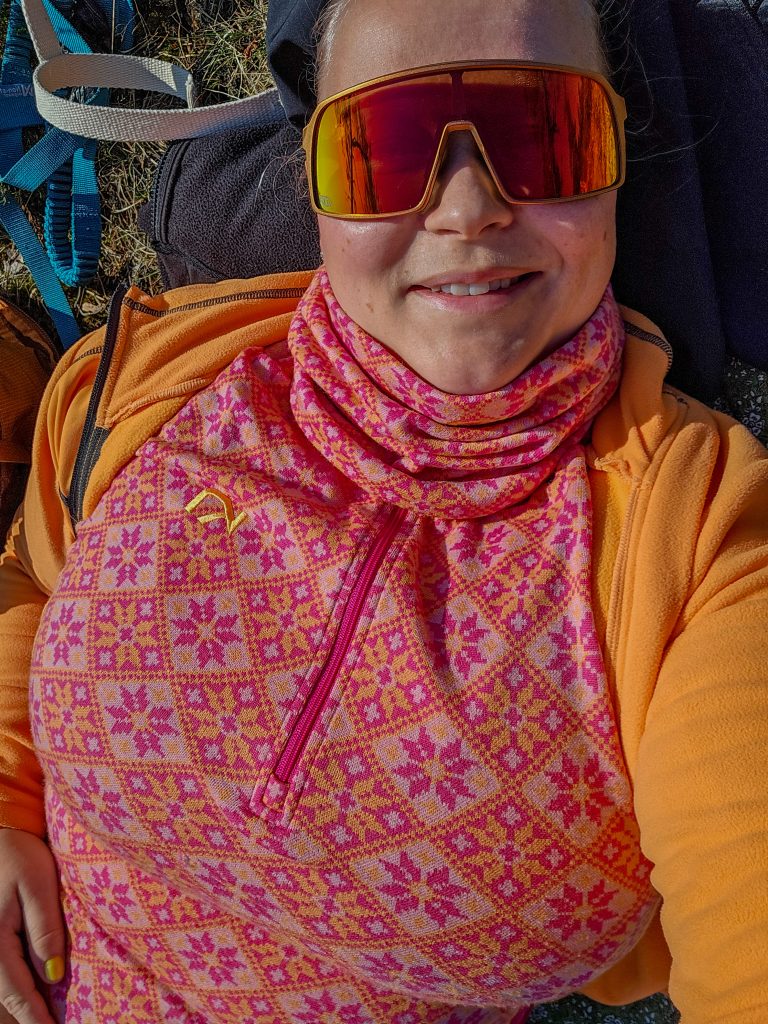
Kari Traa has been part of my wardrobe for much longer. I own several of their tops, leggings & wool layers, particularly for hiking in all seasons, skiing & cold nights in a tent. I love the colours, designs & quality of their merino, but the fit is more complicated for me. In general, I find their clothing relatively slim & close-fitting, which can work brilliantly for base layers but means some of the bottoms fit more tightly than I personally prefer wearing on their own.
I would particularly love a little more room through the hips, seat & waist in some of their larger sizes. On my body, the extra fabric needed around my hips & bum can change where the rise actually sits, while the tops generally work much better for me & are pieces I wear regularly. But they are snug.
Kari Traa therefore remains a brand I really like, but not one where I assume an XL or XXL will automatically work simply because another item in the same size did. If years of shopping in a larger body have taught me anything, it is probably this: never trust the letters on the label. Read the actual measurements.
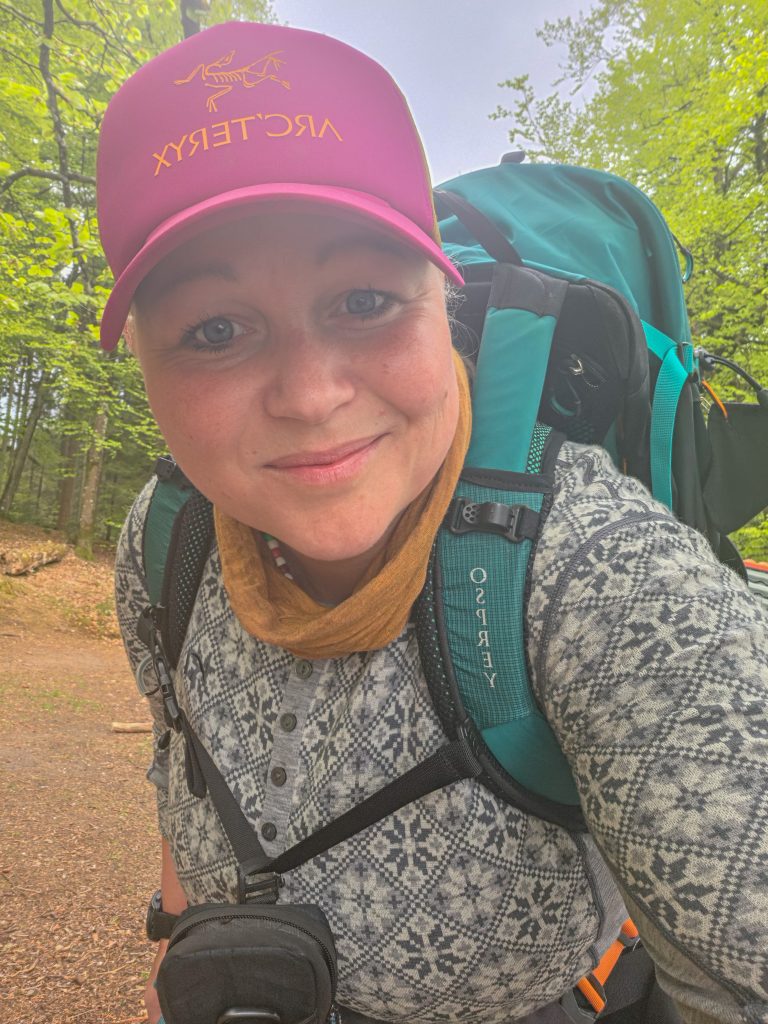
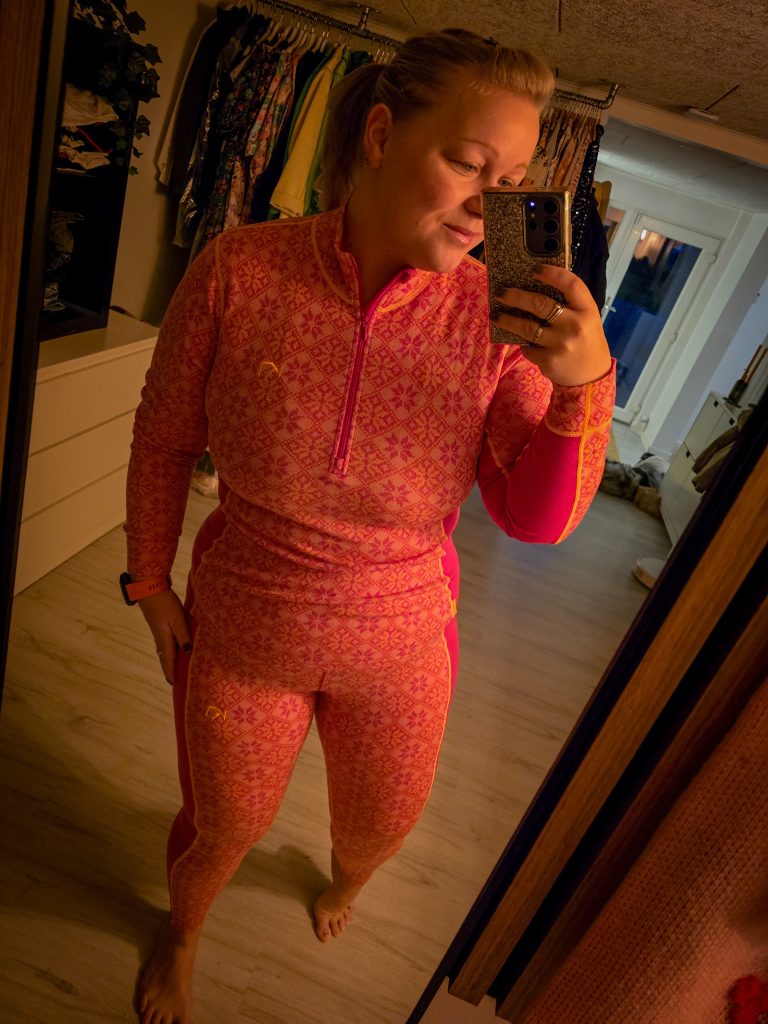
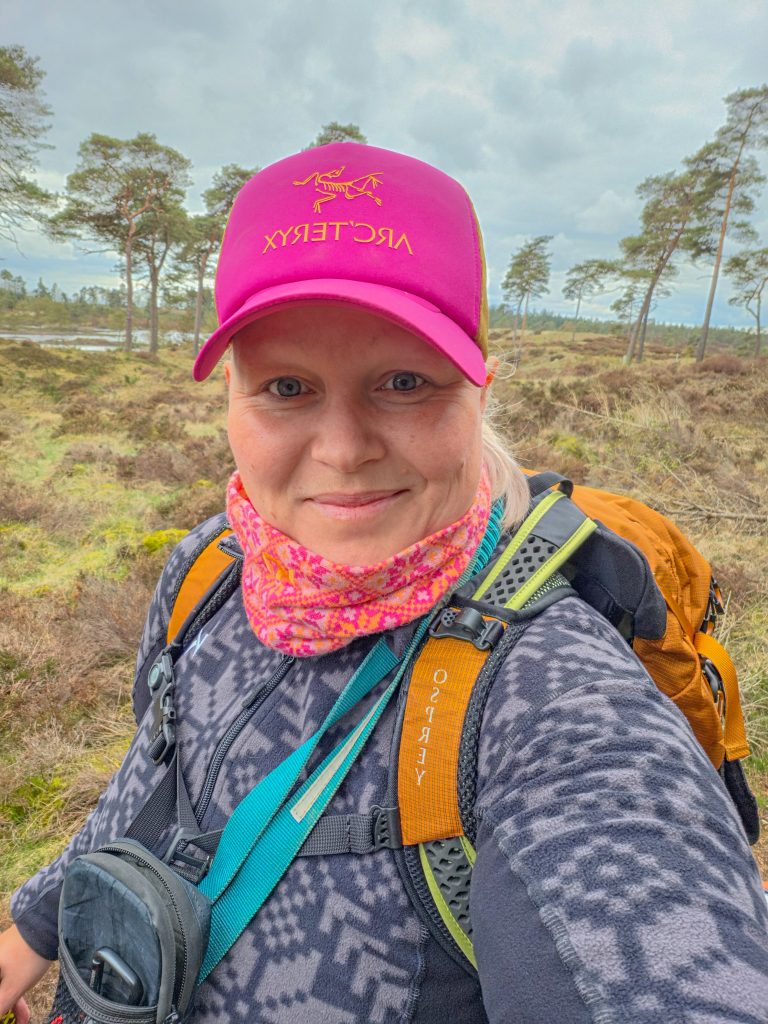
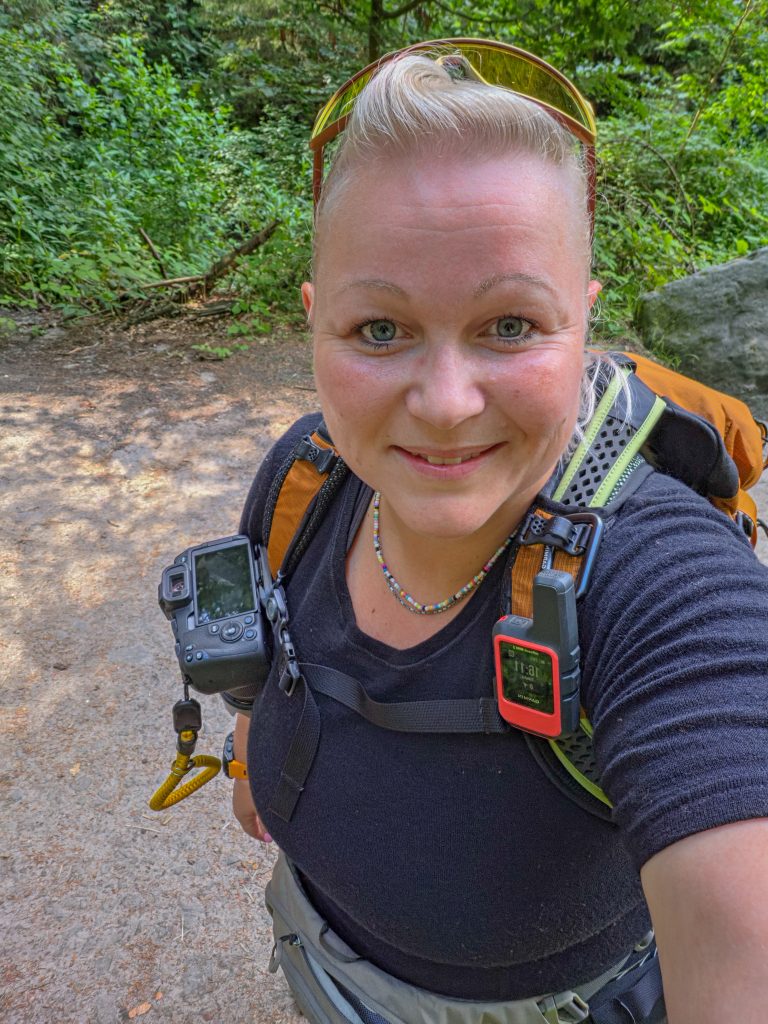
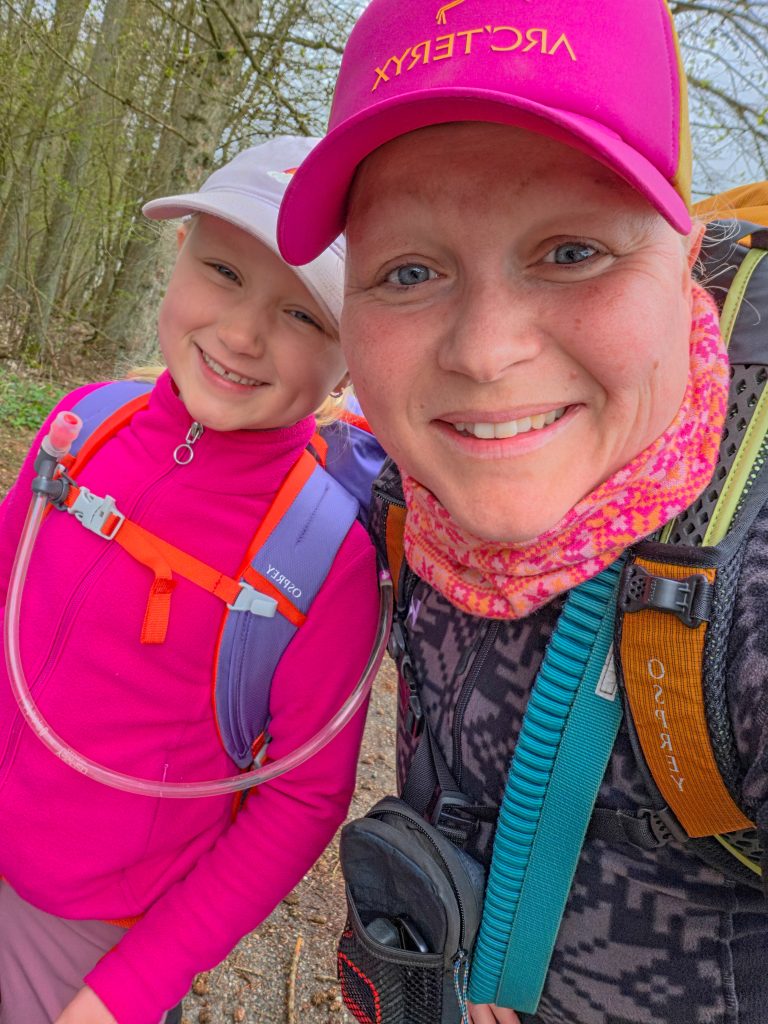
Showed below: Me wearing different versions of the Kari Traa base layers, fleece & me wearing the black Dilling plus-size merino wool t-shirt.
Tights & activewear: Bara Sportswear
If there is one brand that repeatedly makes me feel as though bodies like mine were actually present somewhere in the design process, it is probably Bara Sportswear. Over the years, I’ve accumulated quite a collection of their long tights, three-quarter tights, training shorts, longer biker-style shorts & even a dress with built-in shorts, in everything from patterns & colours to classic black.
More importantly, I actually use them.
Their tights have become staples for strength training, everyday life & hiking because they give me the combination I often struggle to find elsewhere: enough compression to feel supportive & stay where they should without making me feel restricted. The side-pocket versions are particularly useful because I apparently never go anywhere without a phone, keys, dog treats or several other things I might theoretically need along the way.
The longer shorts have become some of my summer favourites. I wear them for hiking & training, but just as often with an oversized shirt on an ordinary day. Not every Bara product fits me perfectly. Their sports bras, for example, are less suited to my larger chest, & I would personally like more room there. Overall, however, their combination of sizing, fit & durability is among the best I’ve experienced. A few pieces have even survived accidental encounters with the tumble dryer courtesy of Michael — absolutely not part of my recommended testing procedure — without shrinking or losing their shape.
Bara has also started expanding beyond traditional activewear into more outdoor-oriented clothing. I haven’t personally tested enough of that range to recommend it yet, so for now it remains firmly on my list of things I would very much like to try.
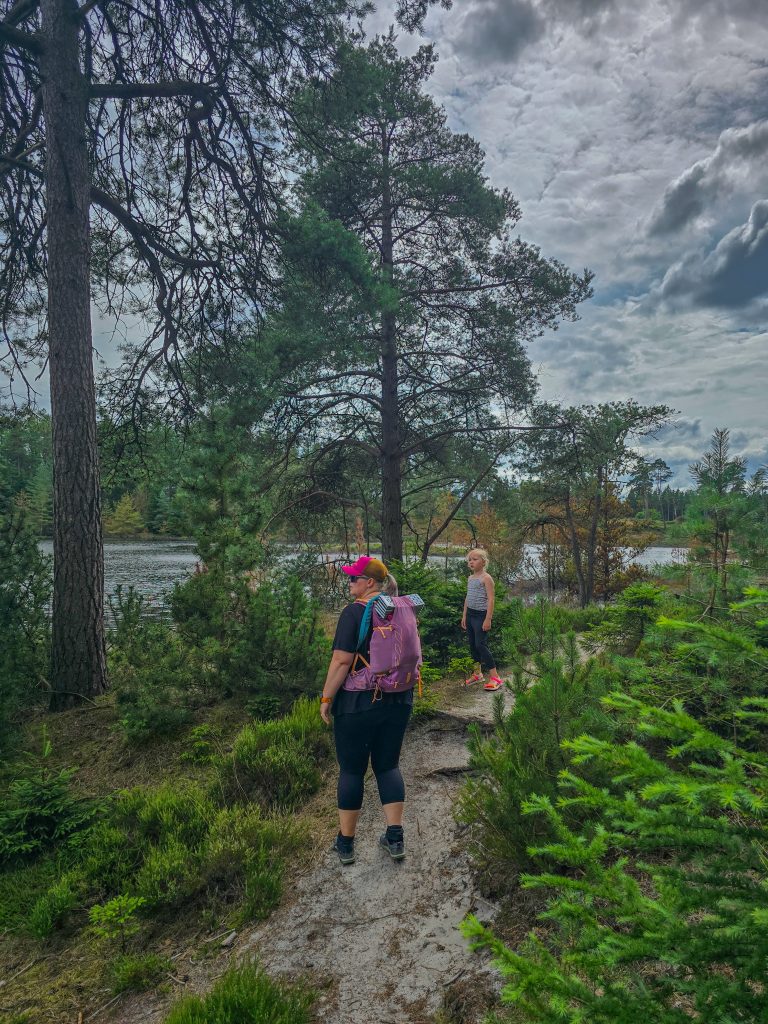
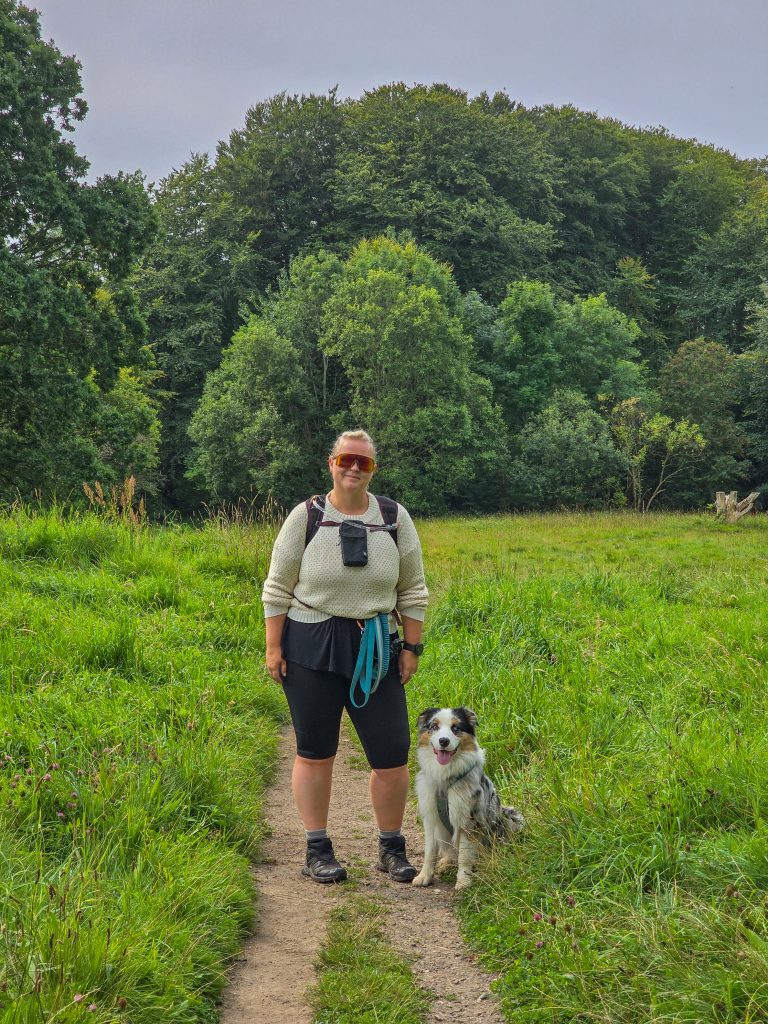
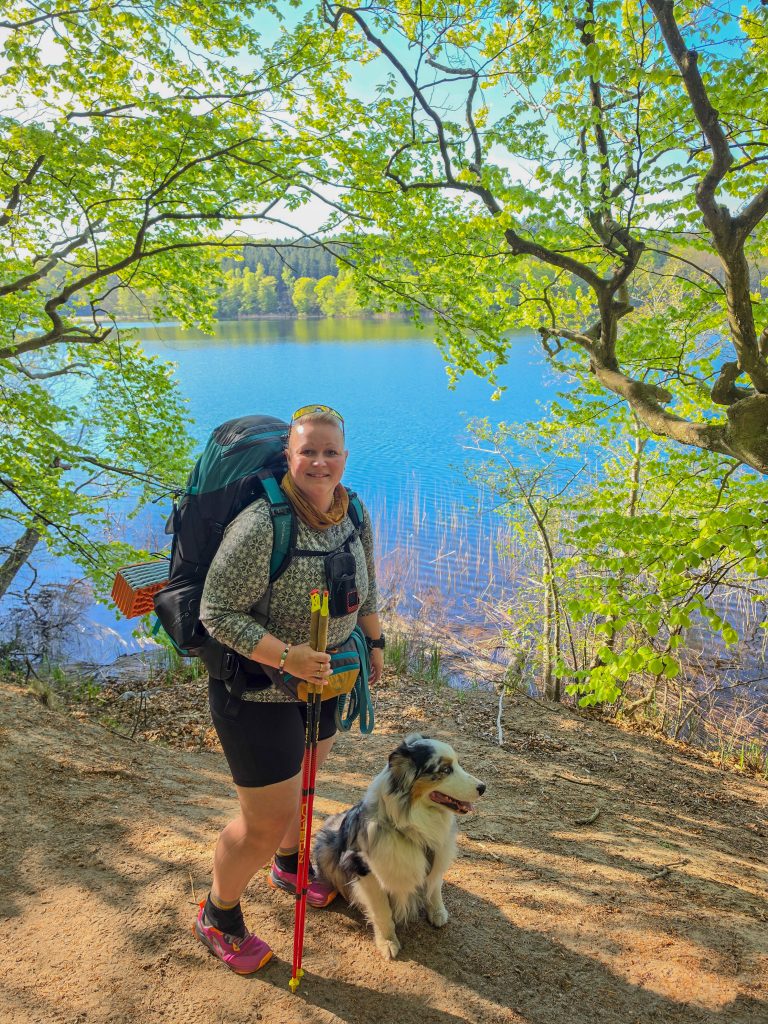
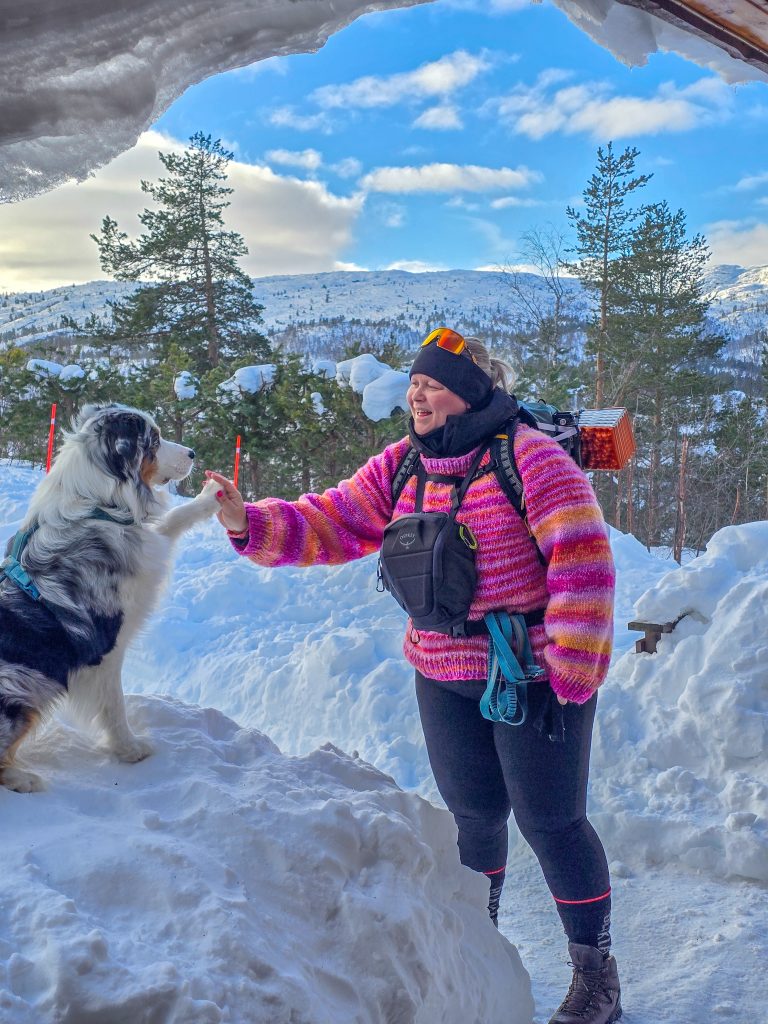
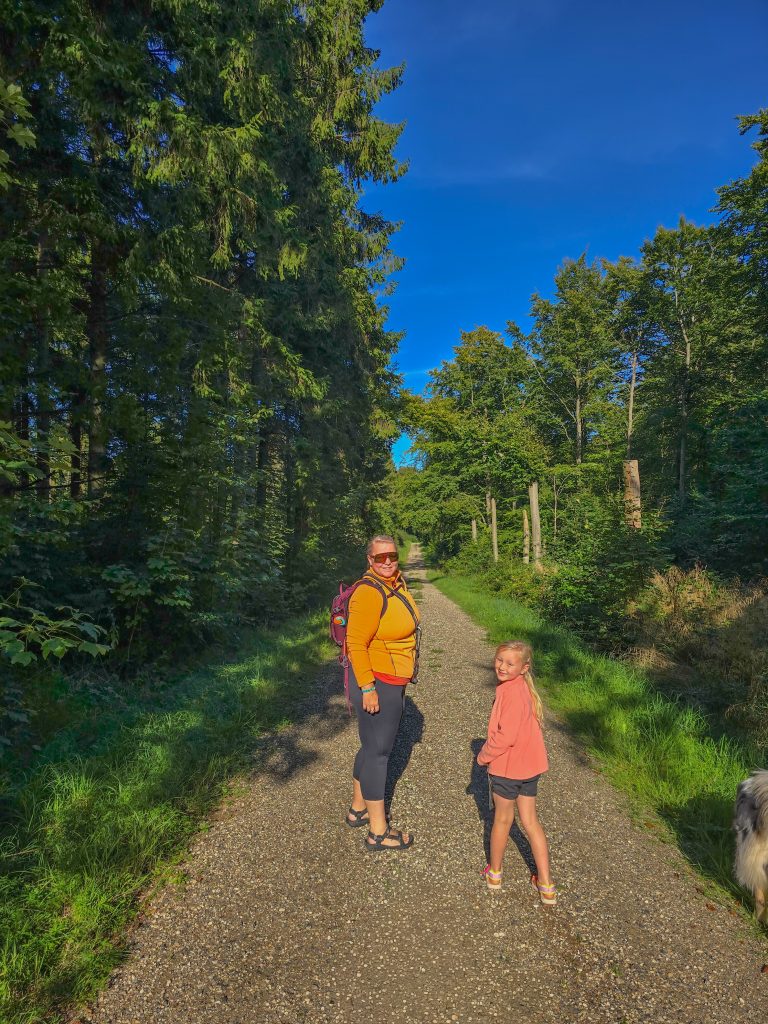
Showed below: Wearing all the different kinds of Bara tights, shorts, long shorts, 3/4 & long tights. I have a lot of tights with different kinds of printing & colours on them, too.
Outdoor clothing beyond the obvious outdoor brands
Some of the things I wear outside don’t come from brands I would automatically classify as traditional outdoor companies. Zizzi is one example. Because the brand is built around plus-size women, I can actually find clothes designed for bodies closer to mine, although I wish they offered a broader selection of genuinely outdoor-focused pieces.
And, please, more colour.
One of my recurring frustrations with plus-size clothing is how quickly the palette becomes black, navy, beige & perhaps a dark green if somebody in the design department was feeling particularly adventurous that day. I love bright colours, colourful backpacks & clothes with personality. I don’t want having a larger body to condemn me to a lifetime of practical black.
There are also brands such as Patagonia & Cotopaxi that I continue to return to partly because I appreciate what they stand for around sustainability, responsible production & caring for the places their products are designed to help us experience. Their sizing can still be hit & miss for my body, & I’ve sometimes had better luck in men’s styles than women’s. Cotopaxi in particular has offered some extended-size options, although availability varies between products.
I don’t expect every product from every brand to fit every human body. That isn’t realistic. But I do think an outdoor industry built around encouraging people to get outside should remain curious about who its products currently allow to participate comfortably — & who is still being left standing outside the fitting room.
Showed below: Me wearing the Cotopaxi Capa Insulated Jacket.
Backpacks: Osprey – forever Osprey
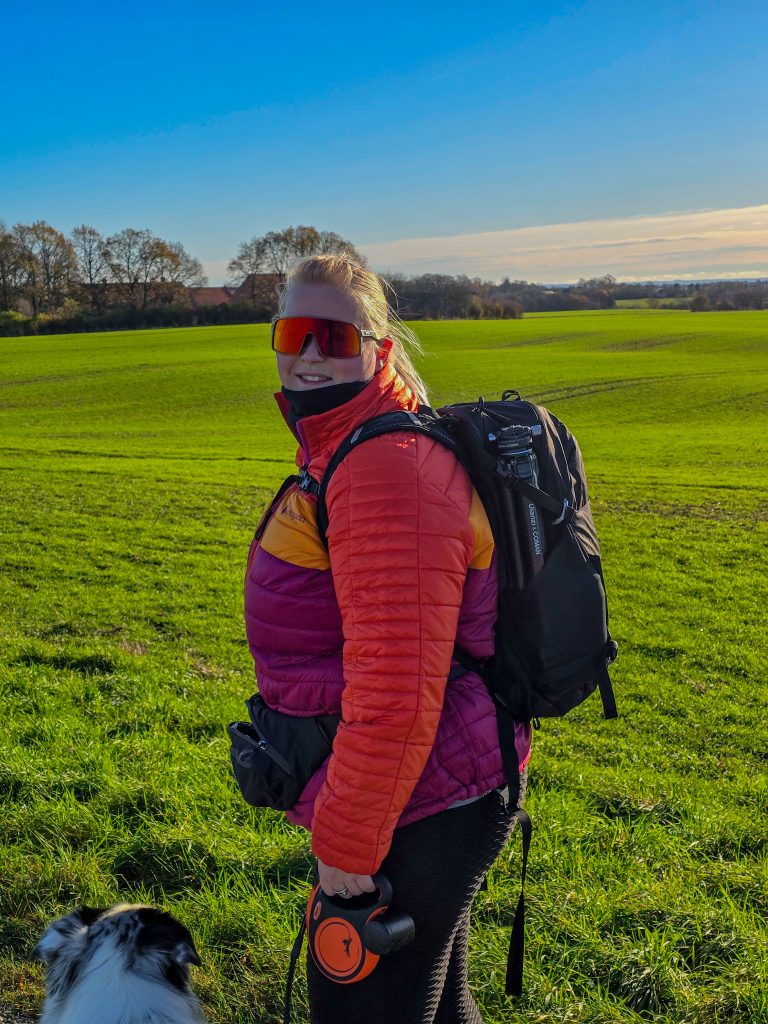
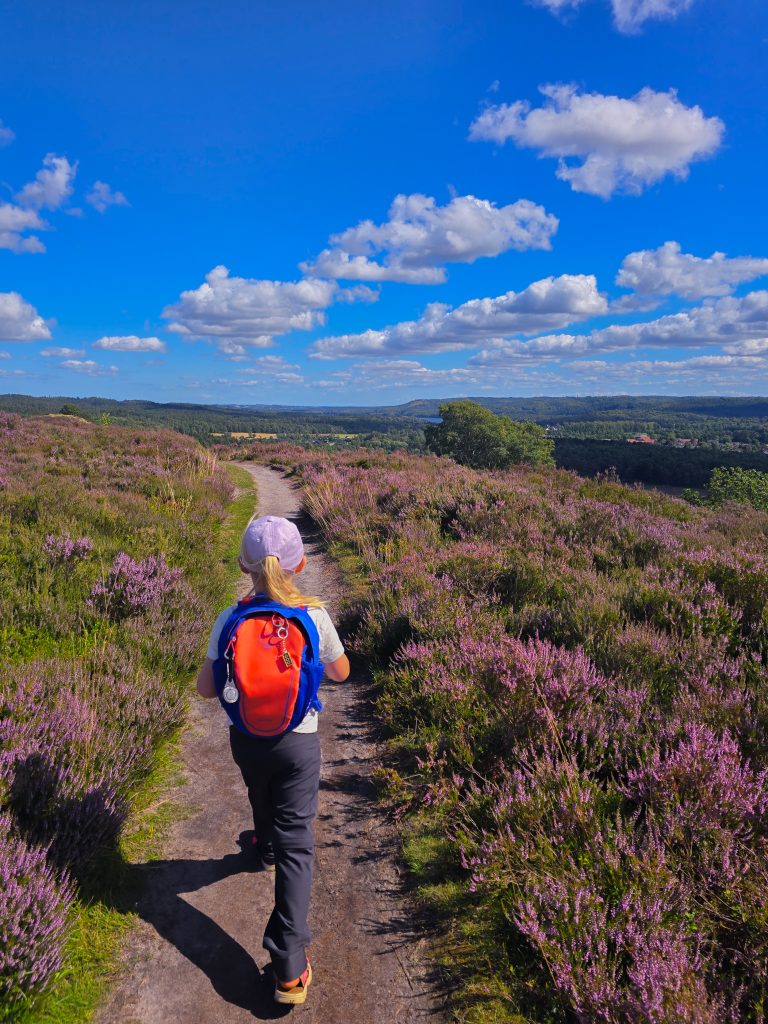
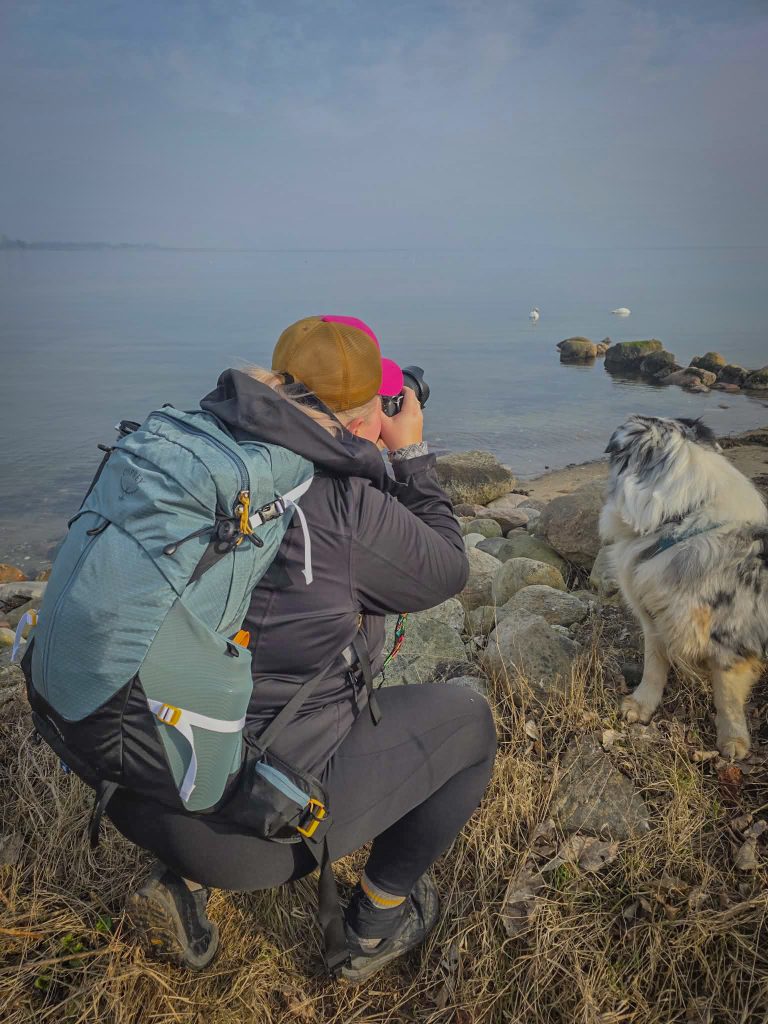
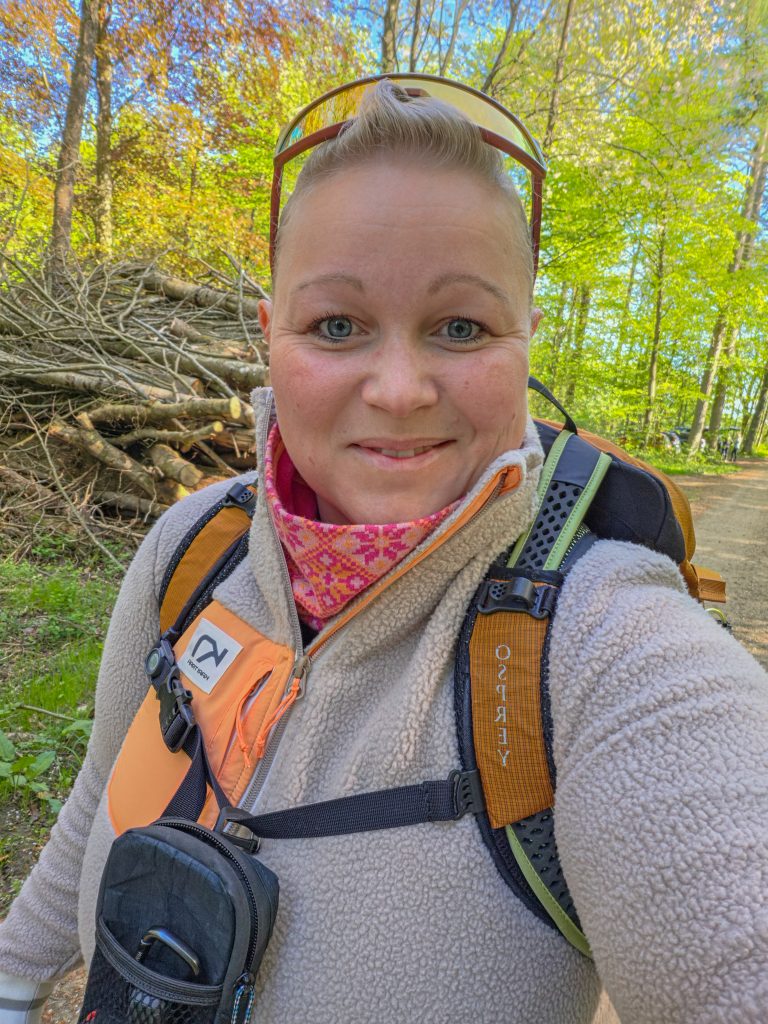
Thankfully, backpacks have caused me considerably less frustration than trousers. Anyone who has followed Sandraway for a while will probably already know that I have a slight Osprey obsession, & I own several of their packs.
Their sizing has generally worked well for me. Some hip belts have ended up closer to the end of their adjustment range than others, but I’ve never experienced the same feeling of exclusion that I have with certain clothing brands. More recently, Osprey has also introduced extended-fit versions of some packs, which I think is an important development even though I don’t personally need all of those adaptations.
That distinction matters to me. Inclusivity doesn’t only become worthwhile when I am the person who benefits from it. The fact that something already works for my body doesn’t mean there isn’t somebody else still waiting for an option that works for theirs.
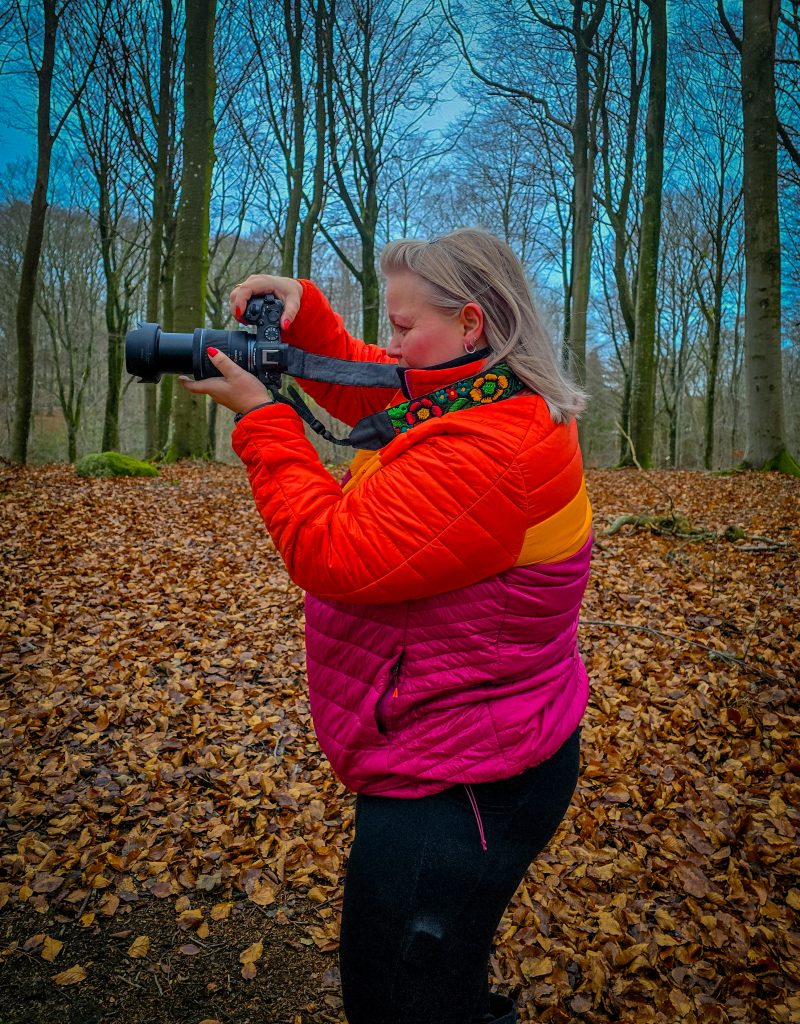
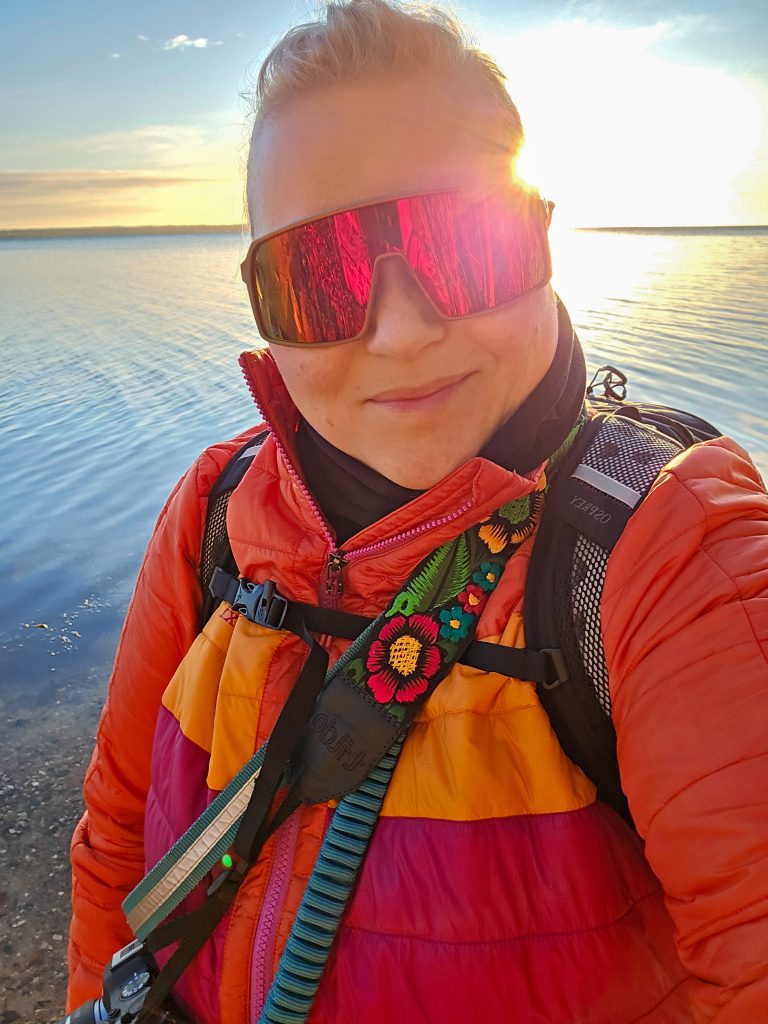
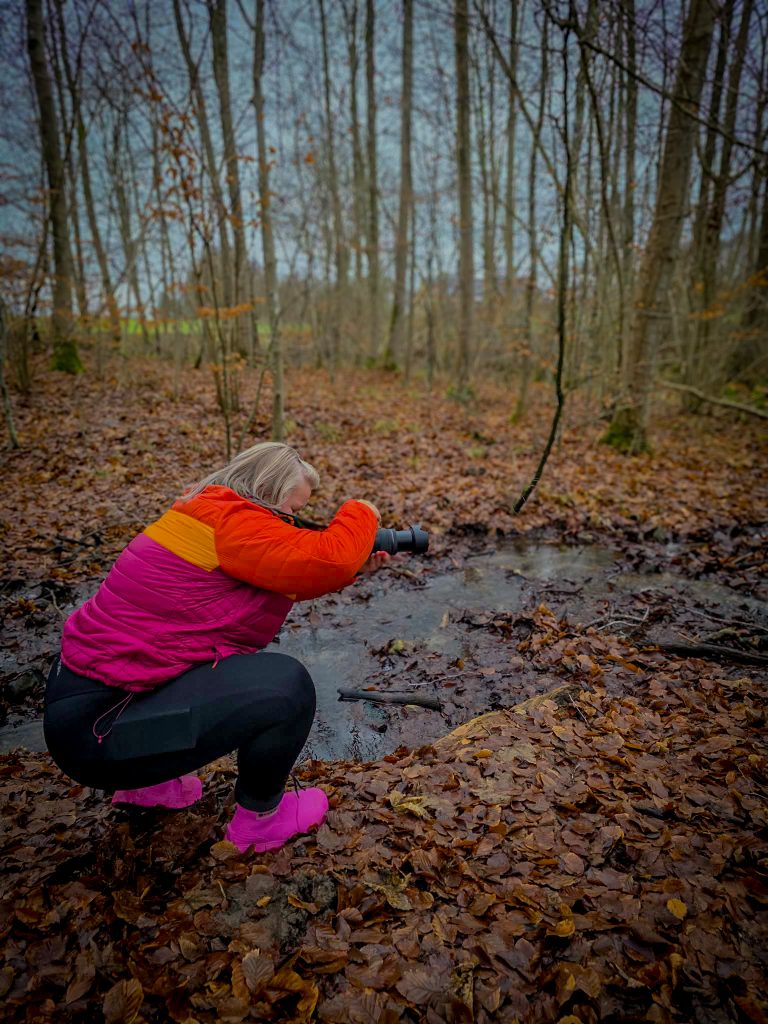
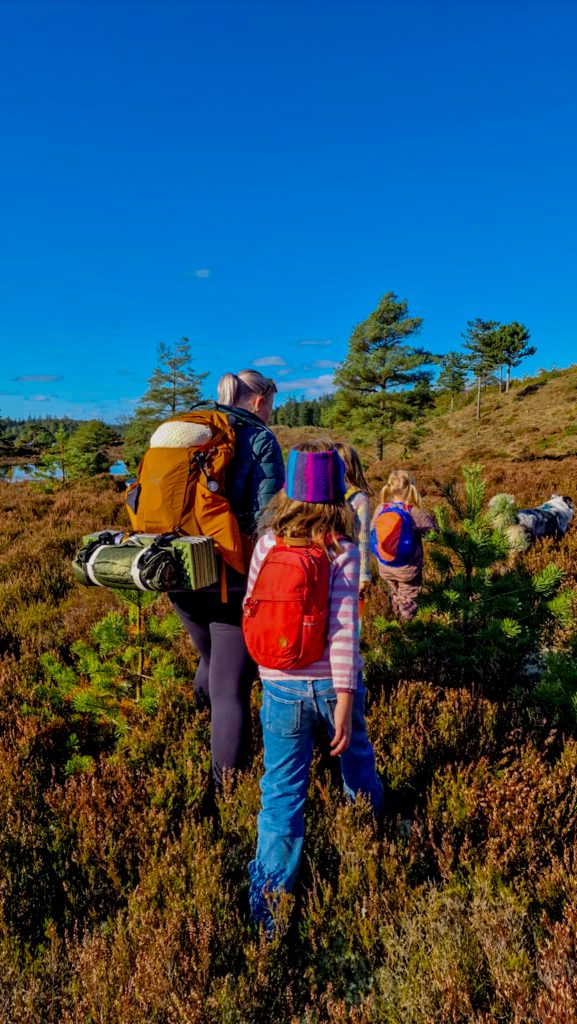
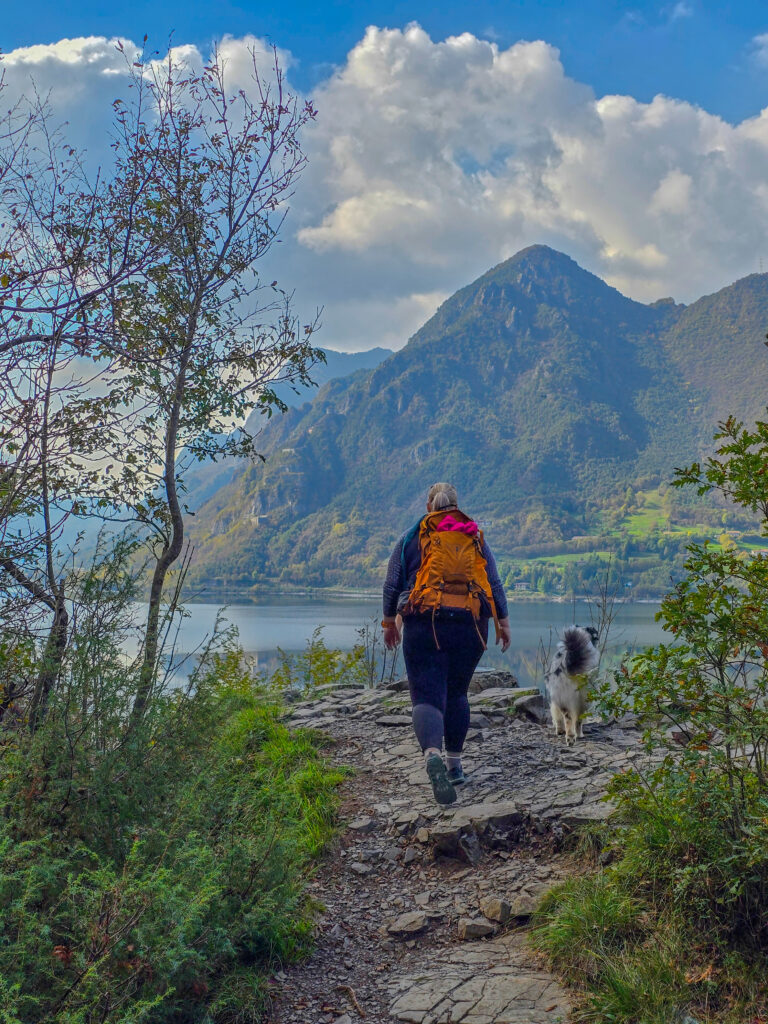
Showed below: Some of my backpacks from Osprey. Even Camille has her own collection too.
And then there is Elise
There is one final “brand” that deserves a place here, although calling it a brand is admittedly stretching the definition somewhat: my best friend, Elise.
She doesn’t run a multinational outdoor company, produce technical hiking trousers or spend her days engineering ultralight fabrics. She knits, & several of my favourite wool sweaters have been made by her specifically for me.
That means my measurements, my proportions, my preferred colours & the way I actually want the garment to fit. After years of standing in fitting rooms trying to work out whether I can make my body fit the clothes, there is something surprisingly powerful about reversing that question and simply asking how the clothes should be made to fit my body.
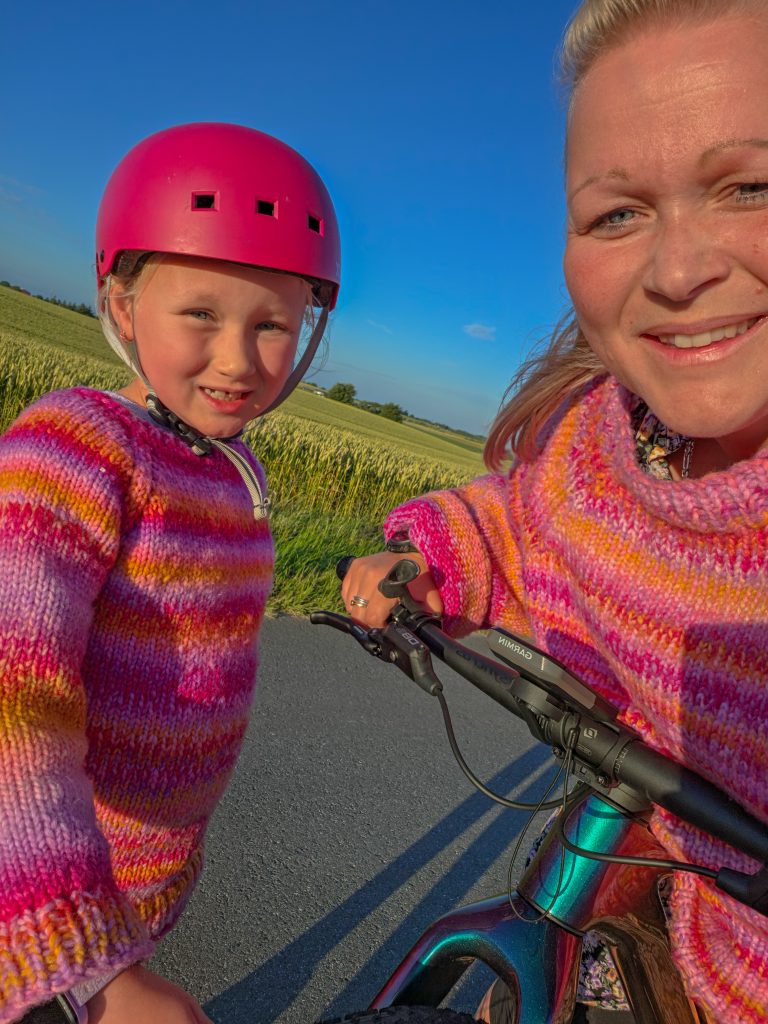
Together we choose colours, patterns & details, & the result is something that is not only comfortable but personal. Many of those sweaters have already followed me onto trails, camping trips, cold mornings & evenings around a fire, & I expect they’ll continue doing so for years.
I also love what they represent. Outdoor clothing is expensive, & I am increasingly conscious of not solving the problem of poor sizing by simply buying endless amounts of stuff. I’d rather own fewer things that genuinely work, take care of them, repair them when possible & use them for as long as I can. Handmade clothing fits naturally into that philosophy because it carries a story, a person & a kind of craftsmanship that mass production simply can’t replicate.
And when you’re lucky enough to have an Elise in your life, you treasure her.
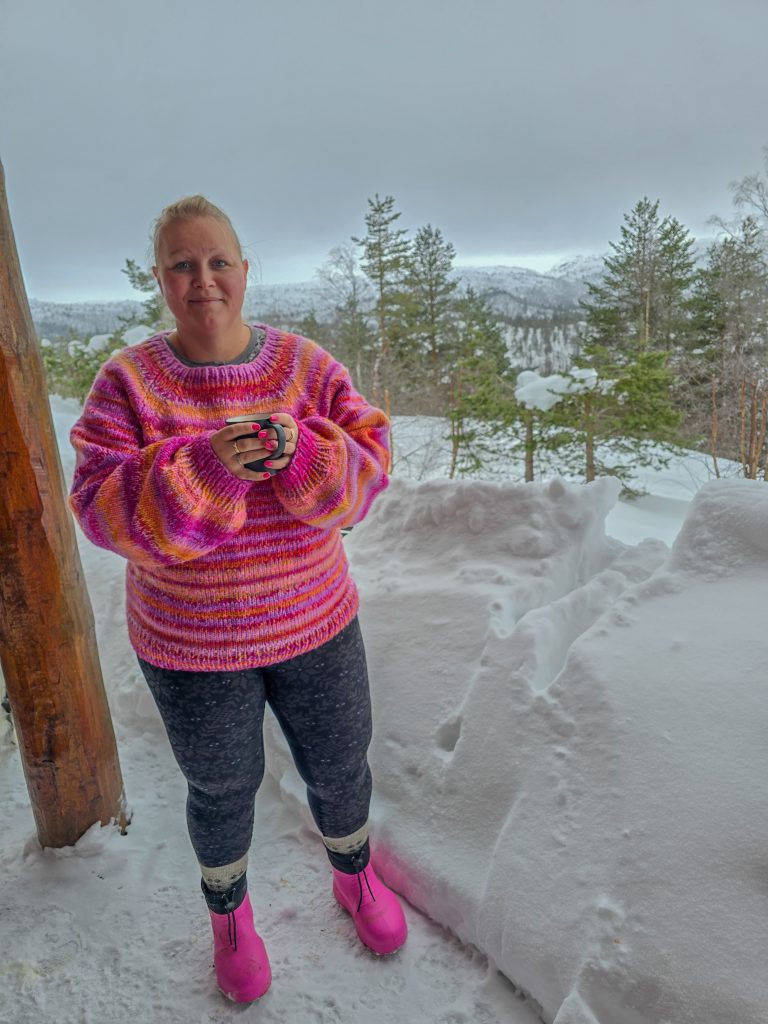
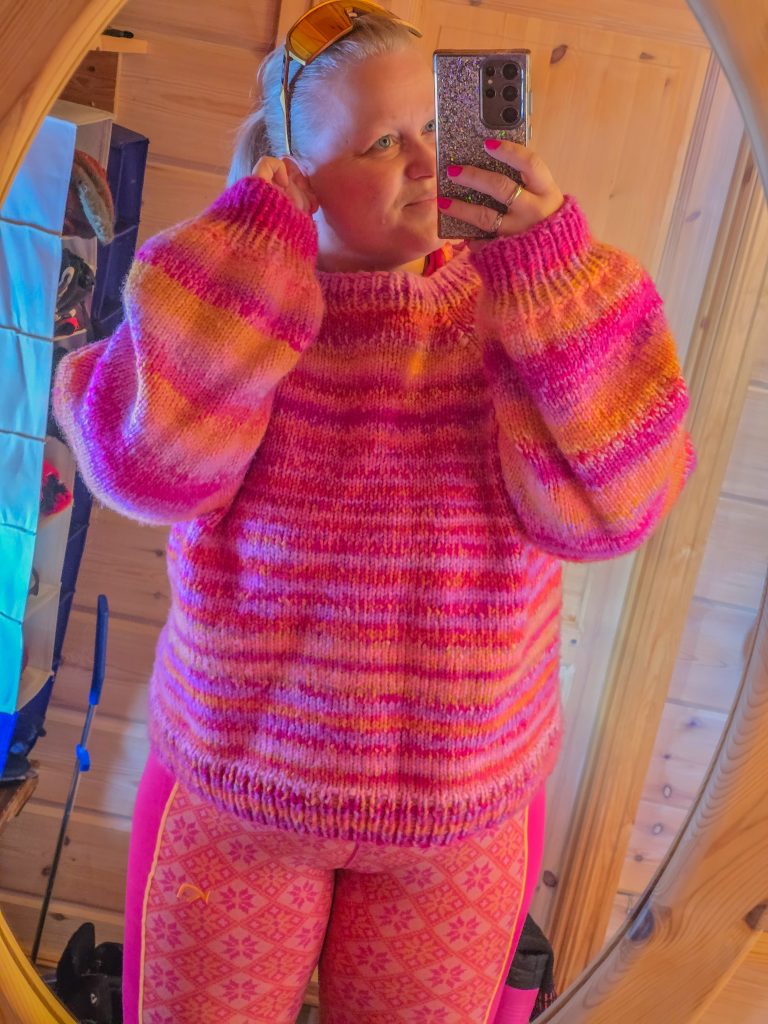
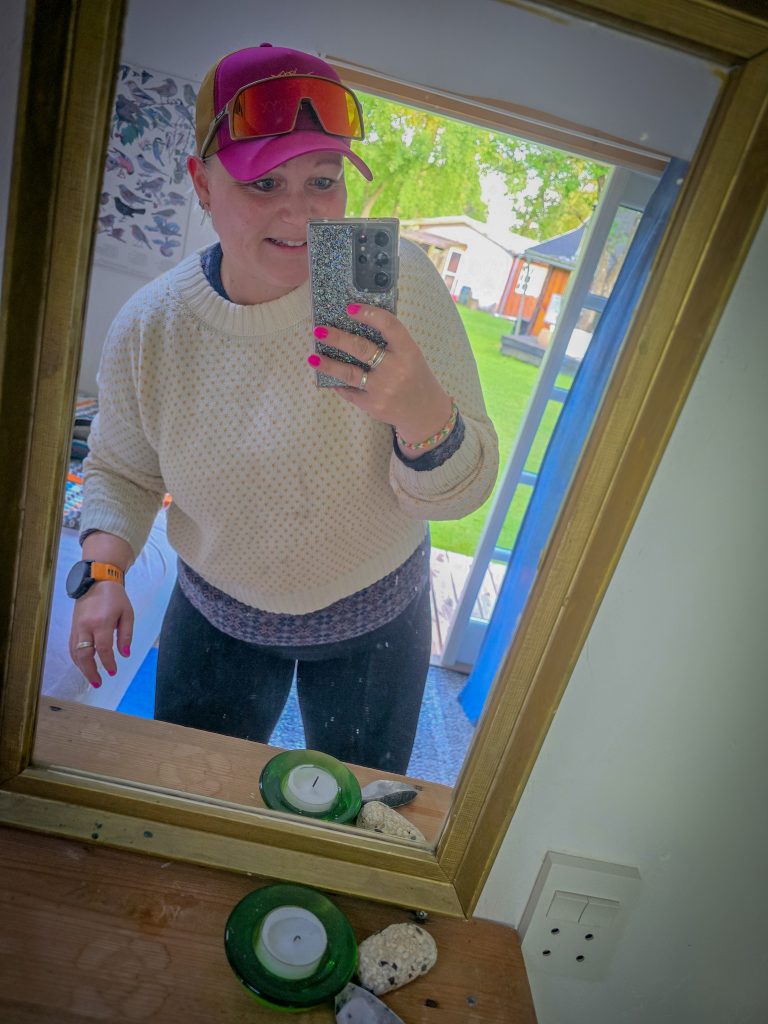
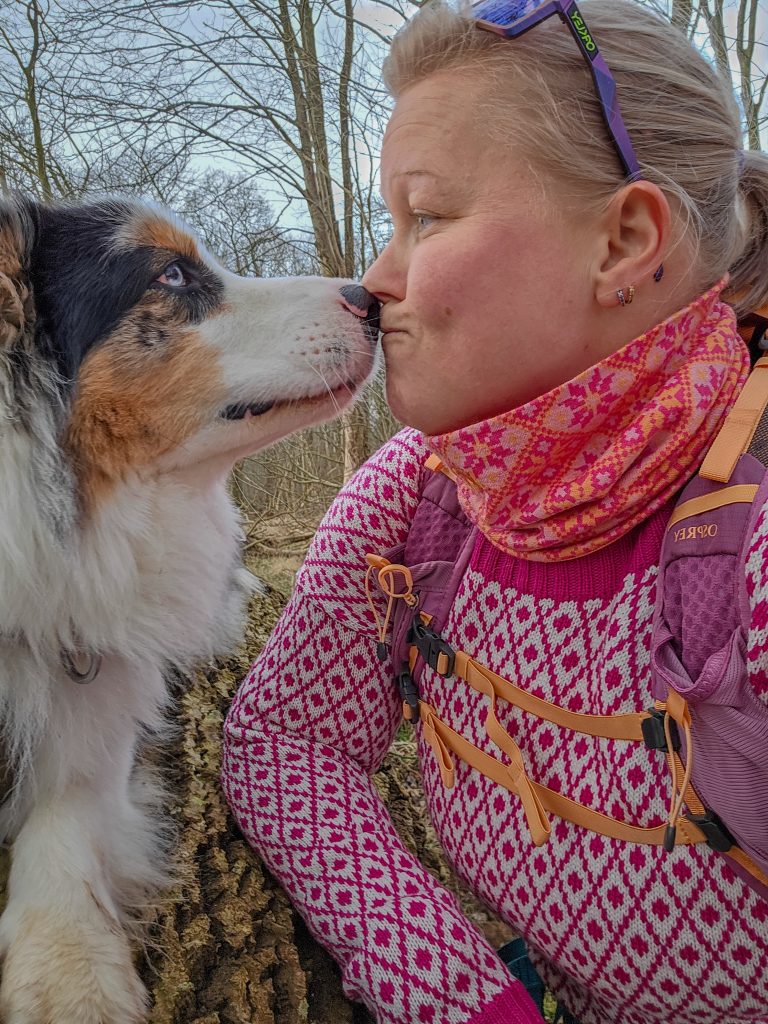
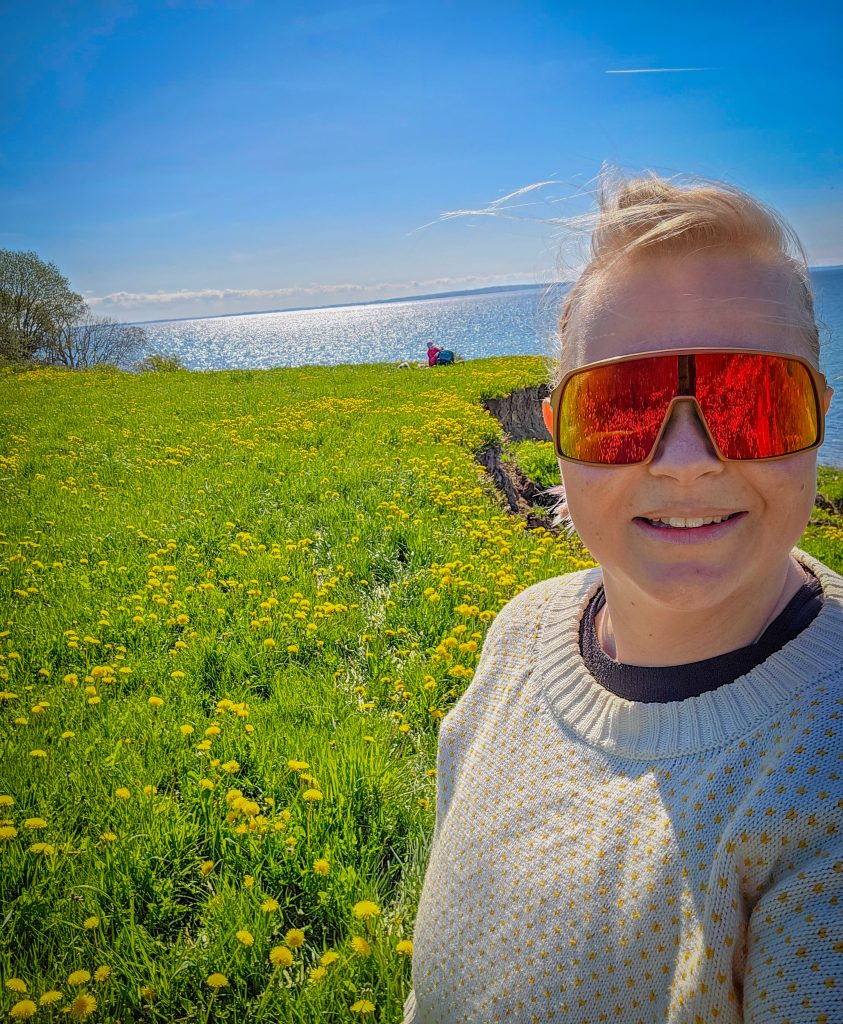
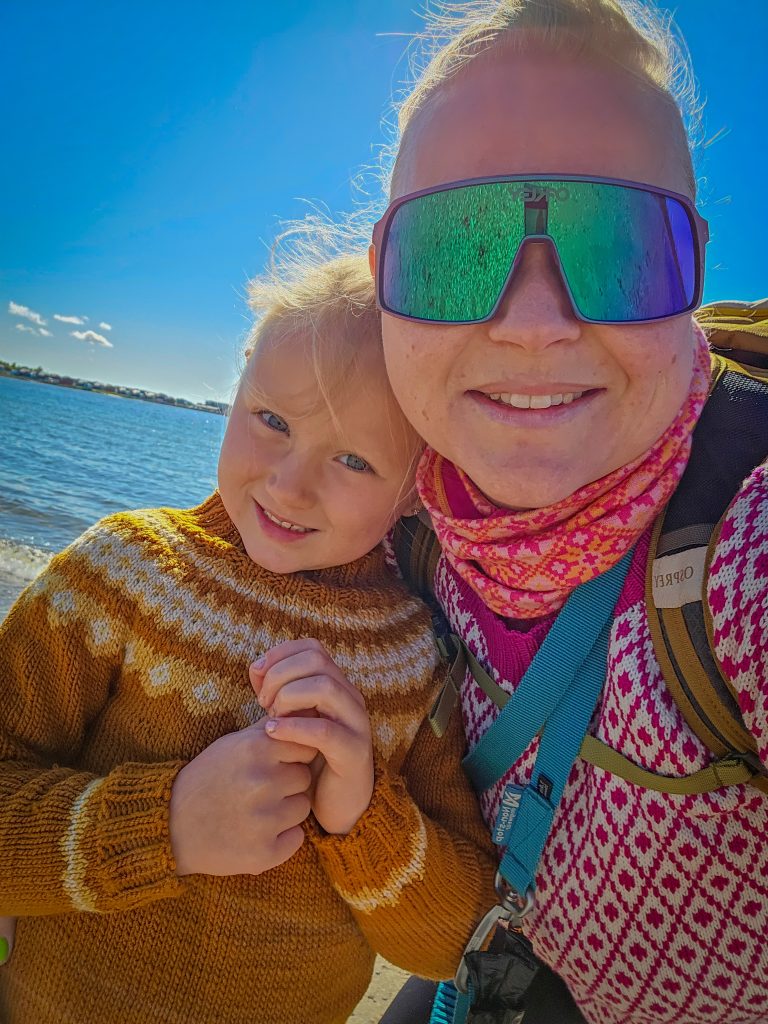
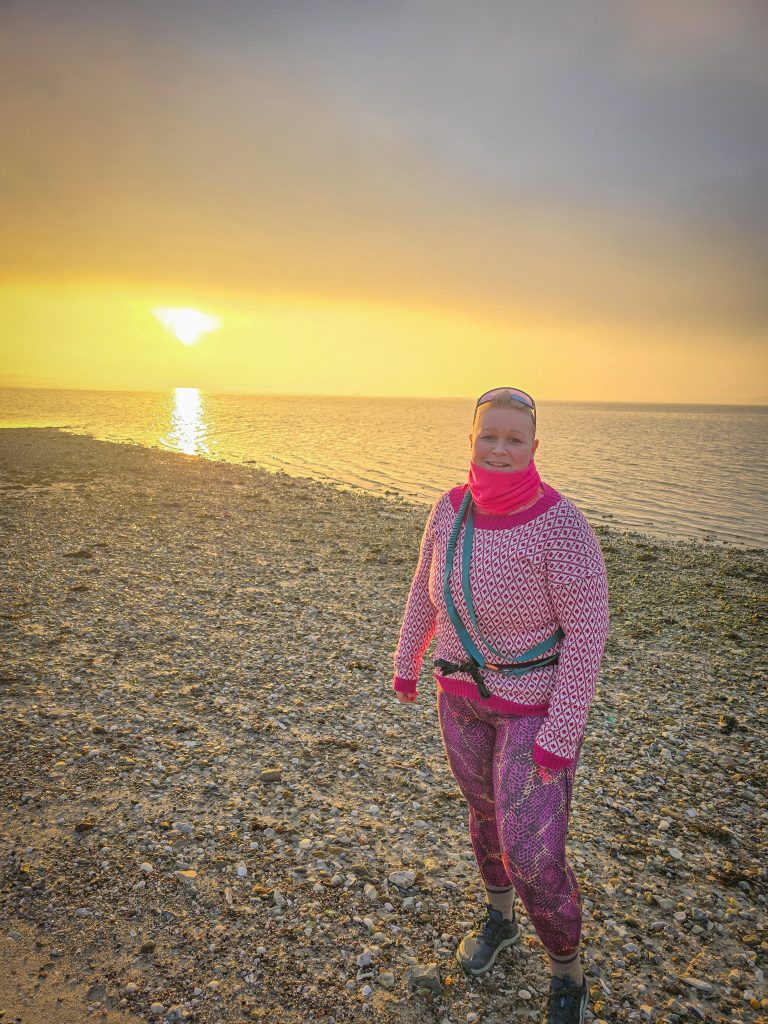
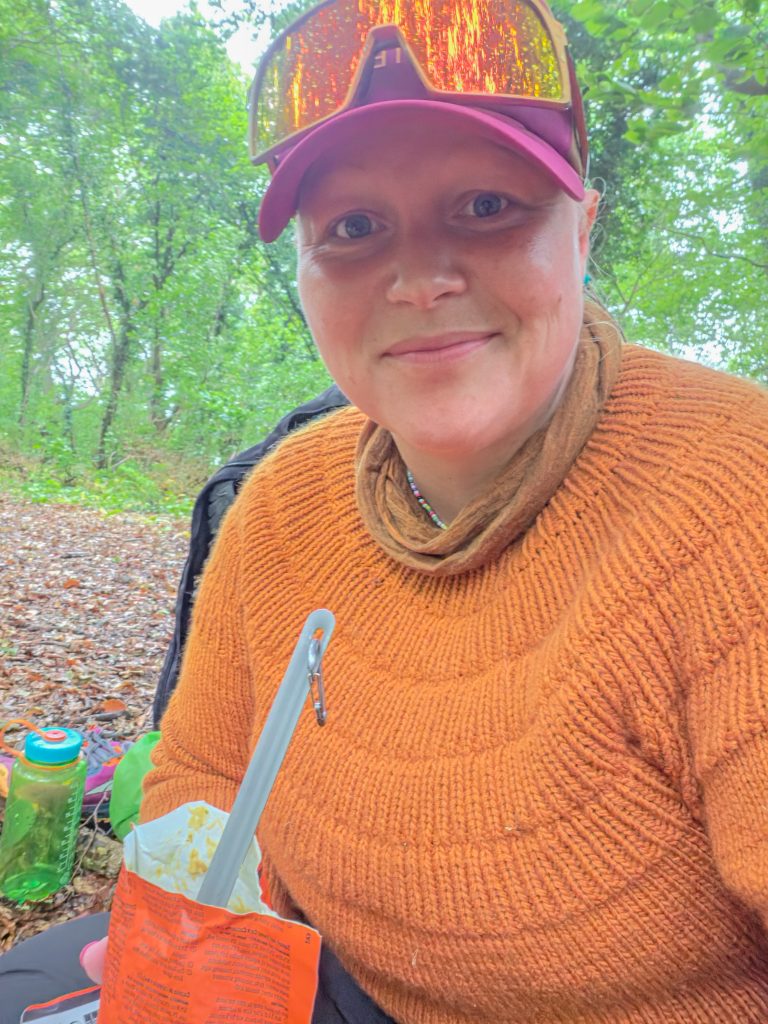
Sowed below: Elise’s knitwaer & some of the different kinds of sweaters she made me. Ultimate best friend goal is to have a matching sweater-design to wear on all our adventures together (last picture).
These are my answers, not the answers
The brands I’ve mentioned here are simply the ones that work — or almost work — for me right now. My body isn’t a universal plus-size body, because there is no such thing. Something that fits my hips perfectly may be completely wrong for somebody else’s proportions, while a jacket I find too tight across my chest might be exactly what another woman has been looking for.
That’s why I don’t want this guide to become another list telling women what they should buy. I’d much rather it gives someone a useful place to start & perhaps saves a little of the time, money & frustration I’ve spent finding things that work for me.
Outdoor clothing isn’t cheap, & I don’t want to own enough technical gear to equip a small Scandinavian village. I’d rather find a smaller number of things that genuinely work & use them until they can’t reasonably accompany me on another adventure.
So if you’ve discovered a brand, product or hidden gem that works brilliantly for a body traditional outdoor sizing tends to forget, I’d genuinely love to hear about it. Leave a comment or send me a message. One of the things I have always loved about the outdoor community is how willing people are to share what they’ve learned, & perhaps the most useful plus-size outdoor guide isn’t one written by a single person at all. Perhaps it’s one we gradually build together.
The world I hope she inherits
Becoming a mother changed this conversation for me in a way I hadn’t expected. Before Camille, most of my thoughts about body image, clothing sizes & belonging were directed inward. They were about my body, my frustrations, my insecurities & all the ways I thought I might need to change. I spent years wondering whether the problem somehow lived within me, whether I simply needed to try harder, become smaller or eventually learn how to fit myself into a mould that had never fitted particularly well in the first place.
Then Camille arrived, & gradually I started thinking less about the body I had inherited & more about the world she would inherit.
When I look at my daughter, I don’t see a clothing size, a BMI chart or any of the labels adults become so accustomed to placing on themselves & one another. I see a curious little person discovering what she likes, what she’s capable of & who she might become. I know I can’t protect her from every comparison, expectation or insecurity she will encounter as she grows up, nor do I think that should be the goal. But I can think carefully about what I teach her through the way I talk about bodies & perhaps even more importantly through the way I live in my own.
I don’t want to teach her that our bodies have to earn experiences, that photographs are only for the years when we like how we look, that swimsuits require permission or that adventures should begin five kilograms from now. I don’t want her to grow up believing there is a correct amount of physical space a woman is allowed to occupy before she becomes too much.
What I can show her is a mother who gets in the photograph, puts on the hiking boots, wears the swimsuit, climbs the mountain & sometimes struggles with how she feels about her body but goes anyway. Not because body image doesn’t matter or because confidence magically appears once you decide it should, but because I increasingly believe that life matters more.
I hope she grows up in a world that becomes better at seeing people before numbers, with more room for different bodies, different abilities, different stories & different ways of moving through life. I also hope she inherits my love for nature, although I don’t particularly care whether that means she becomes a hiker, camper, photographer or anything else resembling me. Those things are mine, & she gets to find her own.
What I hope she inherits is what nature has given me beneath all of that: perspective, curiosity & the ability to stop for long enough to notice where she is. I hope she knows the joy of watching the sun rise after a night in a tent, the smell of rain on a forest trail, birds on a quiet morning, cold air filling her lungs & the strange comfort of standing somewhere beautiful enough to make whatever she was worrying about feel temporarily very small.
Most of all, I hope she learns much earlier than I did that she doesn’t have to postpone her life while waiting to become somebody else.
I’m still learning that lesson myself.
And perhaps that is ultimately what this entire article is about. Not pretending that body image doesn’t exist, that health doesn’t matter or that finding clothes in a larger body is the greatest problem anyone will ever face. It is about refusing to let a clothing label, a number or somebody else’s assumptions become the boundary around the life you allow yourself to live.
Because at the end of it all, I don’t think any of us will remember the size written inside a jacket. We’ll remember the mountains we climbed, the people we shared them with, the sunsets we stopped to watch, the laughter around a campfire & all the stories we collected along the way.
None of those experiences are reserved for a particular body type.
They belong to all of us.